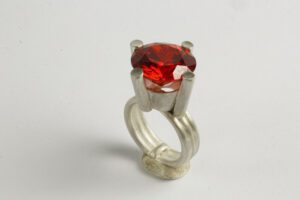
Lab-Grown Stones series
Lab-grown gemstones are identical to natural ones in chemical composition and similar in appearance, although the eye may detect colour and saturation variations. They are created in labs with highly controlled processes, pressures, and heat sources. Lab-grown gemstones have higher clarity than most natural ones. This does not mean that all flawless gemstones are necessarily artificial, but if a stone of a high clarity grade is natural, it will be very expensive and hard to find.
The process of lab-grown moissanite replicates what happens in nature. Silicon carbide powder is heated until it becomes gas under controlled conditions, creating the right balance of elements and allowing the moissanite to grow over several months. Natural Moissanite is extremely rare and extremely expensive. Moissanite has a hardness rating of 9.5 on the Mohs hardness scale, which places it just below diamond and above sapphire or corundum.
I prefer using lab-grown gems in my work due to their sustainability and ethical benefits. These gems are created in controlled environments, minimising the environmental footprint and eliminating the uncertainties associated with mining. Traditional mining can cause significant ecological damage and often involves harsh working conditions, including child labour and near-slavery practices. Natural gemstones can have a very dubious past, with the potential to contribute to pollution and support unethical practices that fund conflicts and oppression. My gemstones come from reputable sources and include certificates of authenticity.
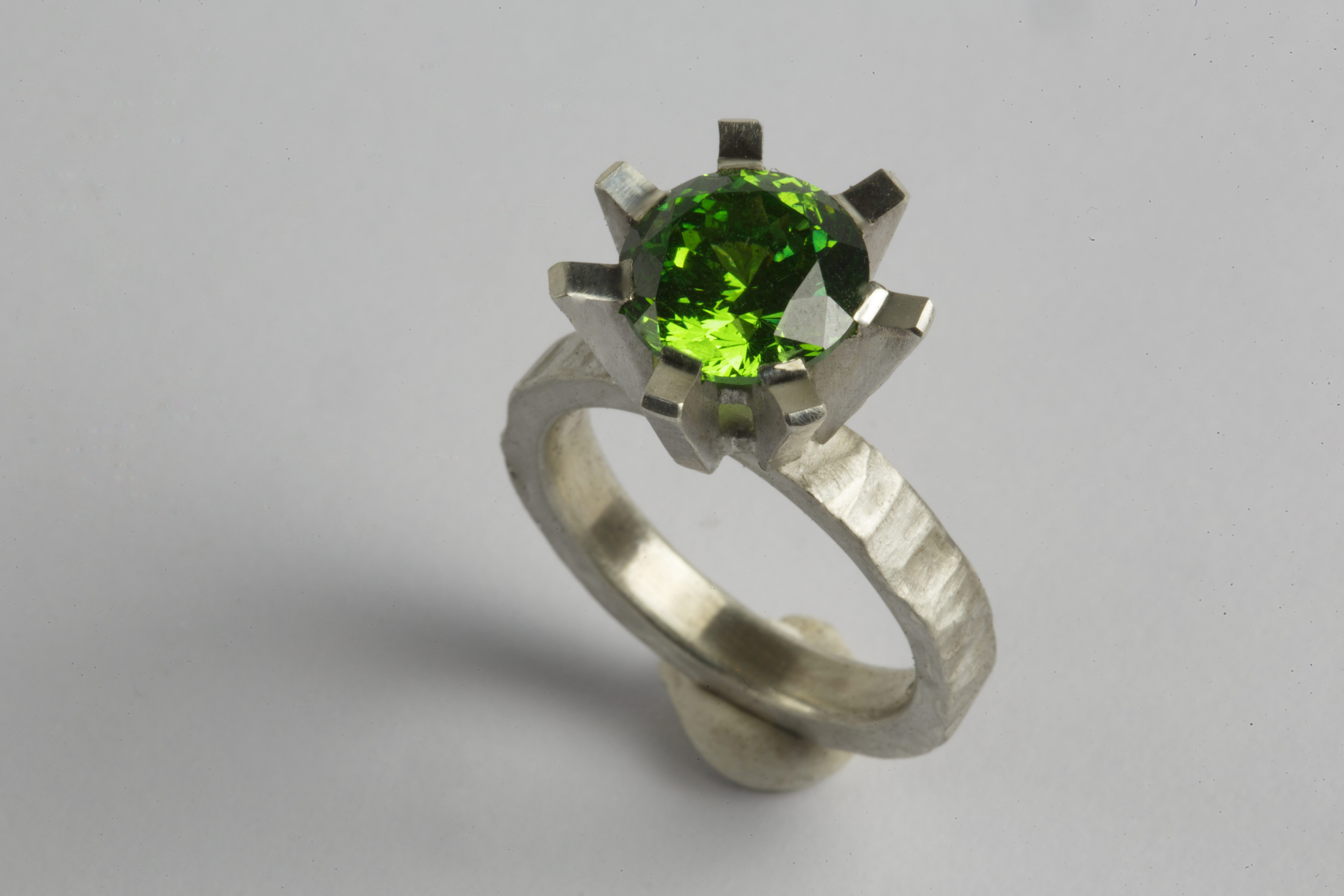
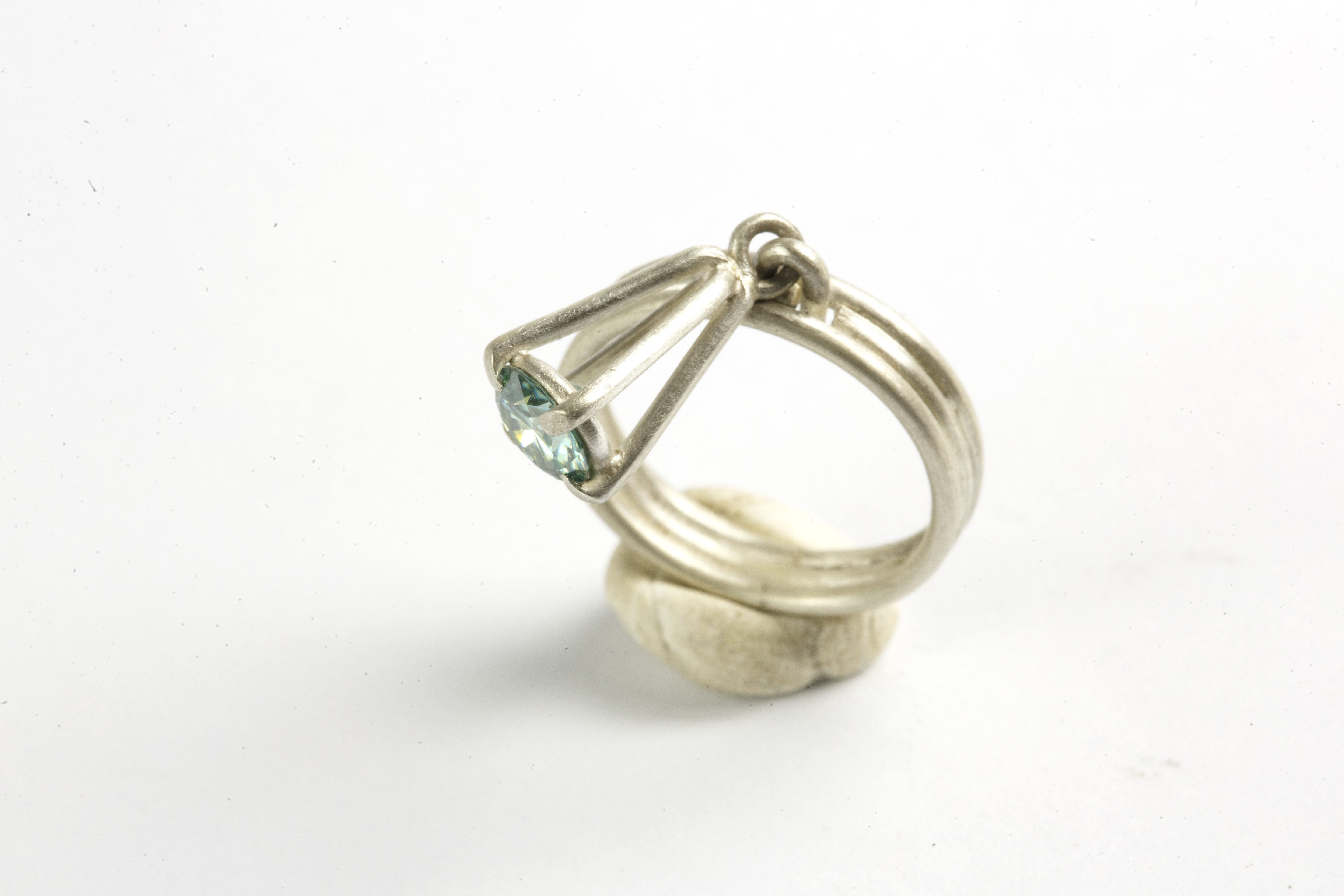
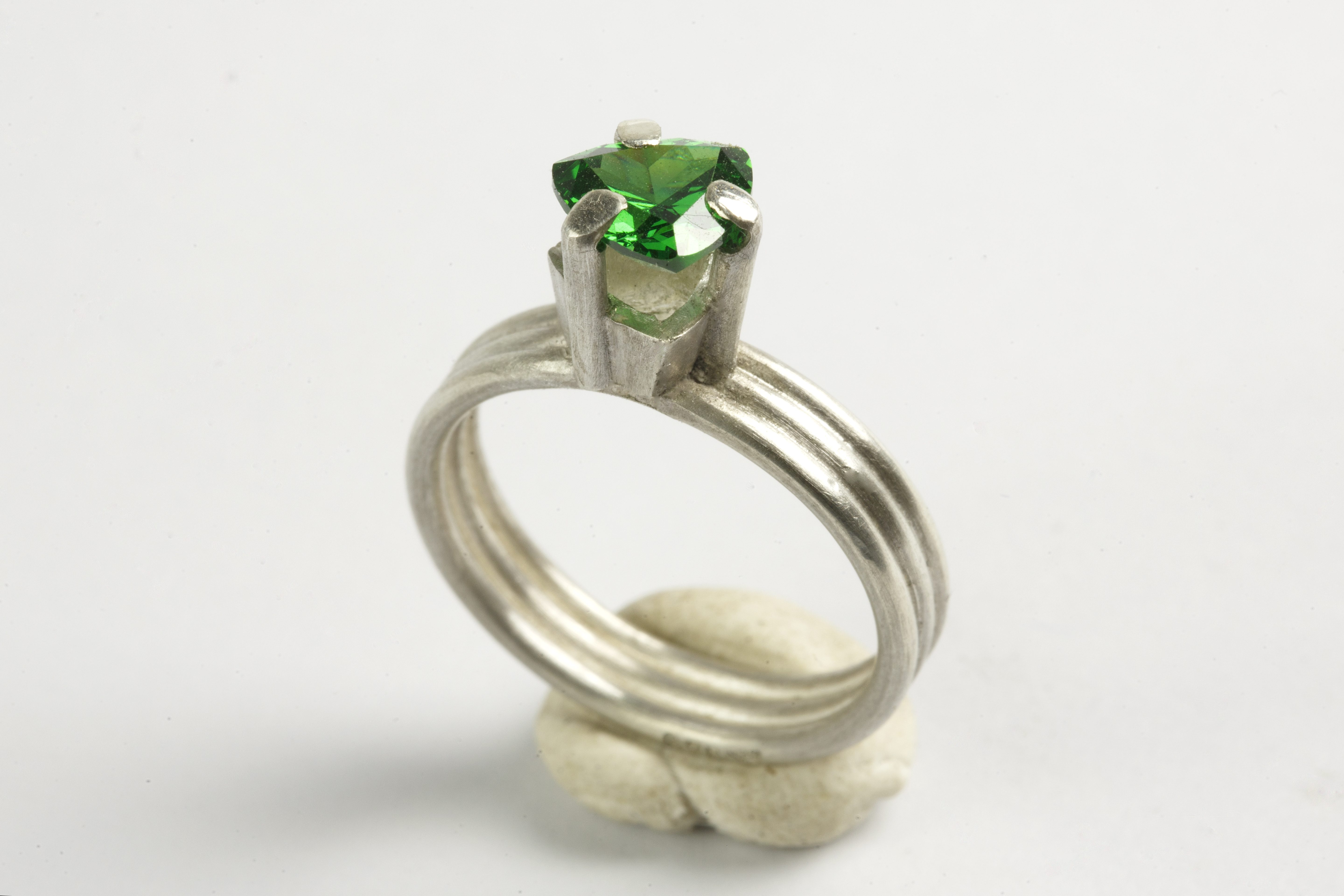
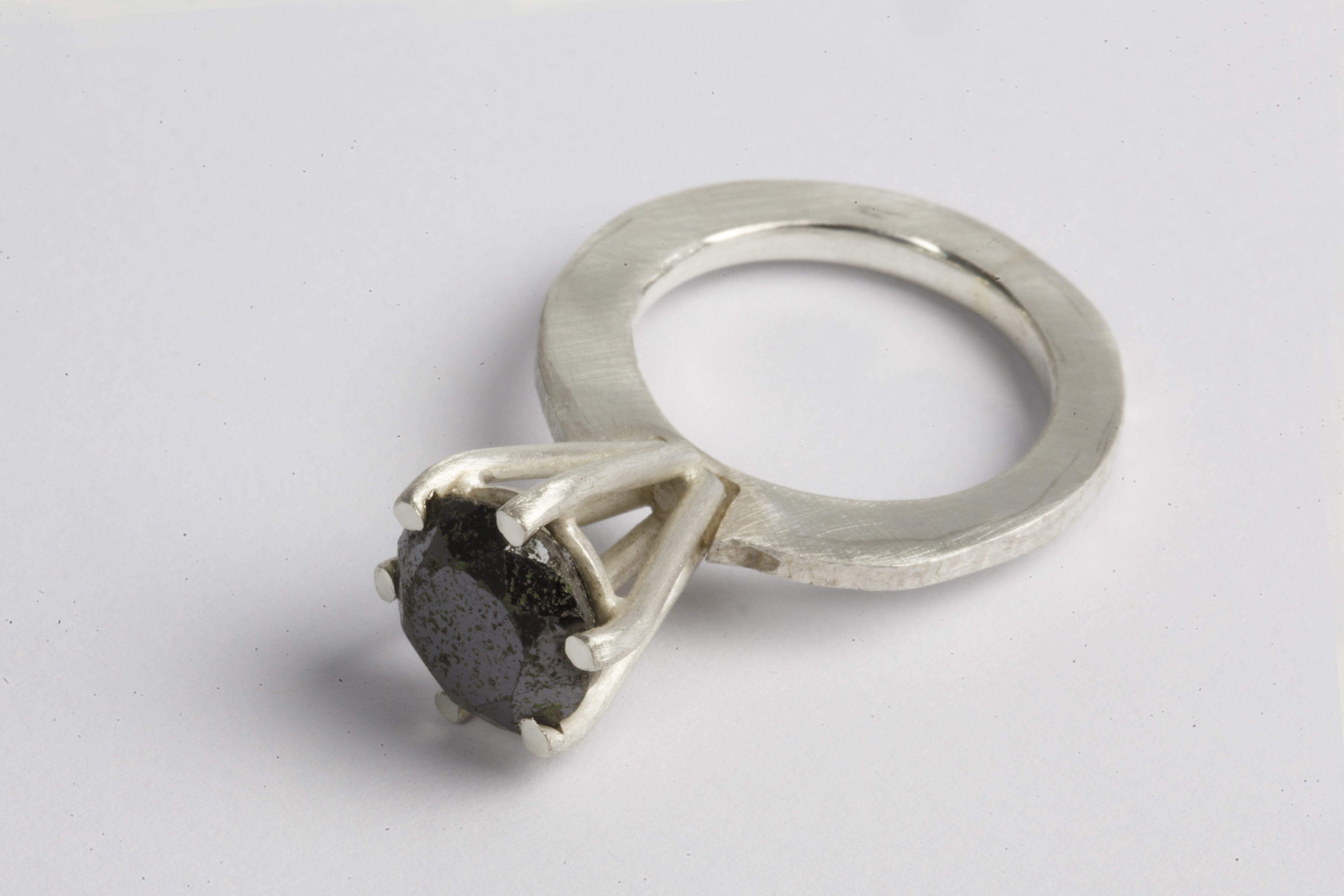
Lab-Grown Stones
In the spirit of contemporary jewellery, which challenges unspoken rules and defies traditional material constraints—where facetted stones have no place—I choose to use lab-made gemstones instead of natural ones. I find it fascinating that laboratories can create gemstones that match the exquisite quality of their natural counterparts.. This choice is also a conscious commitment to ethical artistry, standing in stark contrast to an industry fraught with unethical and environmentally damaging practices. Historically, the gem industry has been tarnished by greed and profit-driven motives, from the devastation caused by mining to the marketing strategies that manipulate perceptions of exclusivity and rarity. However, I have utilised gemstones for their contextual quality for over 40 years. Now, I deliberately celebrate how light becomes a magical component as it travels through the unique structures of facetted gemstones.
Lab-made gemstones present a dazzling alternative without compromising on quality. These stones mimic the qualities of their natural counterparts so closely that even the most sophisticated machines and expert gemmologists often struggle to distinguish them. Despite these negligible differences, the price gap remains significant, making lab-made gemstones a more accessible option. Different types of stones refract light in unique ways. For instance, diamonds have a distinctive way of breaking light that sets them apart, much like how water can distort reflections. Meanwhile, sapphires, emeralds, and rubies exhibit their own unique properties. Historically, there have been attempts to imitate diamonds, including practices dating back to ancient times. Notably, Cubic Zirconia was developed as a synthetic alternative, and today, lab-grown materials continue this tradition of imitation. Each of these stones brings something unique to the table, both in their physical characteristics and in their historical significance.
Beyond their physical attributes, the choice between natural and lab-made stones carries profound political and perceptual implications. Our fascination with shiny objects reveals deeper human desires for beauty and status. The distinctions between “real” and “fake” are often misleading, raising important questions about authenticity and value. While the eye can easily identify obvious fakes, it may struggle to differentiate lab-grown stones from their natural counterparts. The gemstone industry’s marketing strategies create an illusion of exclusivity and rarity, manipulating perceptions to inflate desirability. As an artist, I challenge these constructed notions, inviting viewers to reconsider what we value and why. As we witness our planet’s resources depleting and land devastation wreaking havoc, this decision unequivocally rejects materials tainted by unethical practices. The extraction of natural gemstones often involves scandalous environmental destruction and, more disturbingly, the exploitation of human labour. The grim reality of slave labour and the financing of warlords through both legal and illegal gemstone trades only perpetuate cycles of violence and oppression.
My work represents a rejection of harmful practices and an embrace of a more ethical, sustainable future, where beauty and integrity can coexist without compromise. Gemstones, formed by the forces of compression, heat, and minerals over millions of years, are now being replicated in labs with similar results. This remarkable achievement deserves far more recognition than the promotion of stones associated with ethical and environmental issues. This fusion of science and artistry underscores a commitment to conscientious creation and fosters a deeper appreciation for the harmony between matter and light.