
OBJECTS as TRIGGERS
The PLACEBO interplay: From Objects to Misconceptions
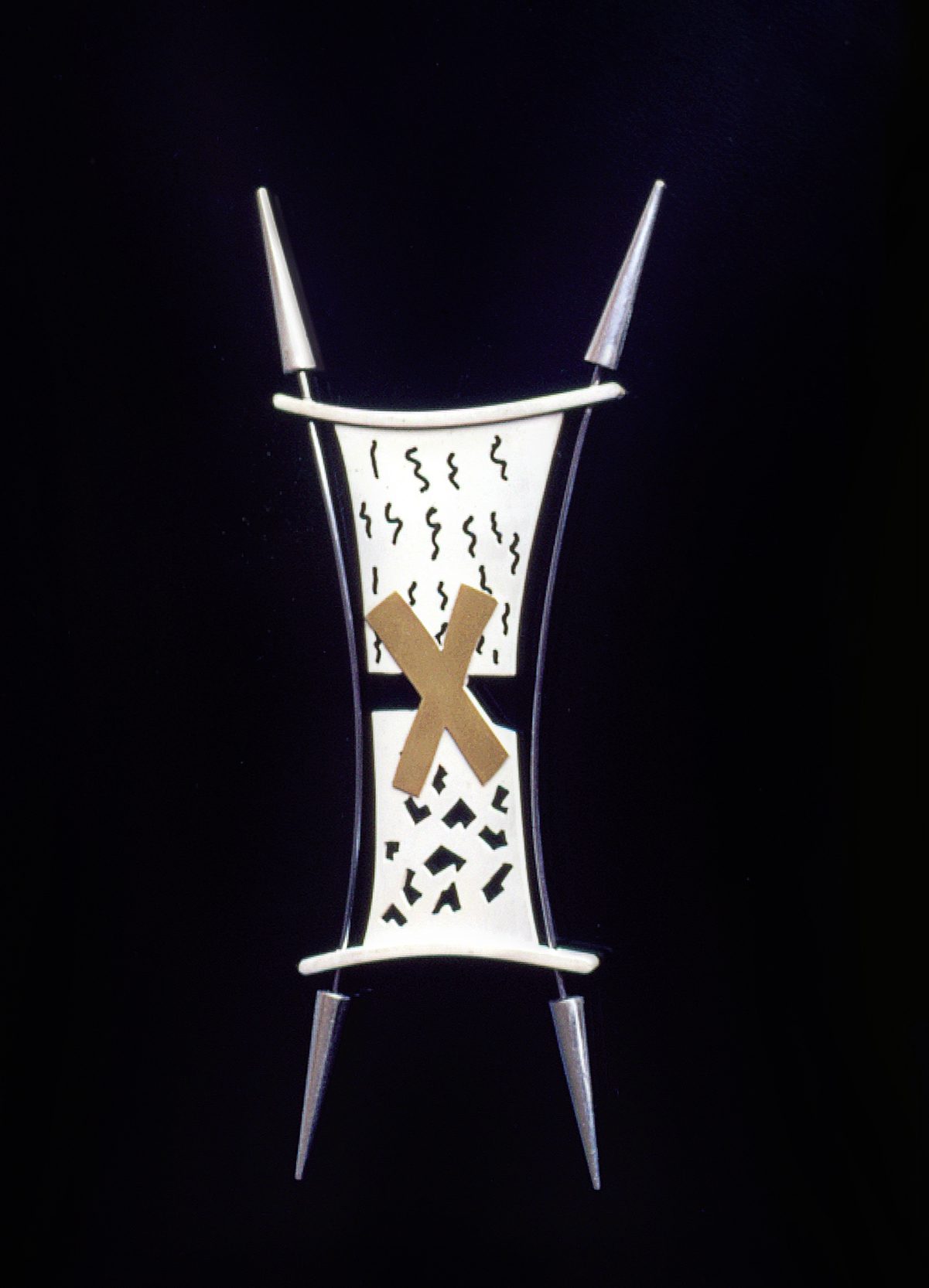
Before the War, brooch, 1987, st.silver, 18kt gold
The Placebo Object explores how belief and perception lead to tangible effects in our lives. Inspired by the placebo effect, where people experience real improvements simply by believing they are receiving treatment, this concept extends to the power certain objects hold. Whether it’s a lucky charm, a talisman, emblems, or culturally significant items like crystals, these objects can influence our mindset and physical performance.
When we look at objects, we’re not just seeing their physical form; we’re also interpreting their symbolism, history, and cultural significance. This subconscious process is influenced by our personal experiences, societal context, and collective memory.
Placebo objects, like an auntie’s wedding band or a cross pendant, demonstrate how deeply personal beliefs and experiences imbue items with power. These objects gain significance through personal connections, memories, and cultural context, influencing the well-being and personal memory of the person carrying them.
On a broader scale, symbols like Jesus on the cross, the swastika (in its original, pre-Nazi context), and the Spear of Destiny show how objects can hold profound power and meaning within cultures. These symbols carry collective beliefs and values that transcend individual experiences, shaping societal norms and behaviours.
Additionally, some objects seem to haunt or empower individuals, like the infamous “Cursed Diamond” or the mysterious “Spear of Destiny.” These objects add another layer of intrigue, as their perceived power can cause significant emotional and psychological effects, further blurring the lines between belief, perception, and reality.
In a world where value is often measured in financial terms, The Placebo Object highlights the intrinsic nature of value itself and challenges us to reconsider what truly holds power and significance in our lives. It underscores how our beliefs shape our experiences and the profound psychological impact these objects have on our perceptions.
The famous Diamond Necklace affair, worth 1.6 million livres (approximately US$15 million today), severely tarnished Queen Marie Antoinette’s reputation, despite questions about her lack of involvement. This misperception fueled public outrage and was a significant catalyst that fueled the French Revolution.
Similarly, Donald Trump’s repeated false claims about election fraud in the 2020 presidential election have profoundly influenced his supporters, leading to widespread belief in these unfounded allegations. This has fueled political division and led to significant events such as the Capitol riot on January 6, 2021.
These examples highlight how powerful and volatile reinforced perception can be in driving significant societal and political changes.
Misconceptions have the power to shape history, whether in 18th-century France or contemporary politics, illustrating the transformative impact of public perception.

After the War, brooch, 1987, st.silver, nickel silver
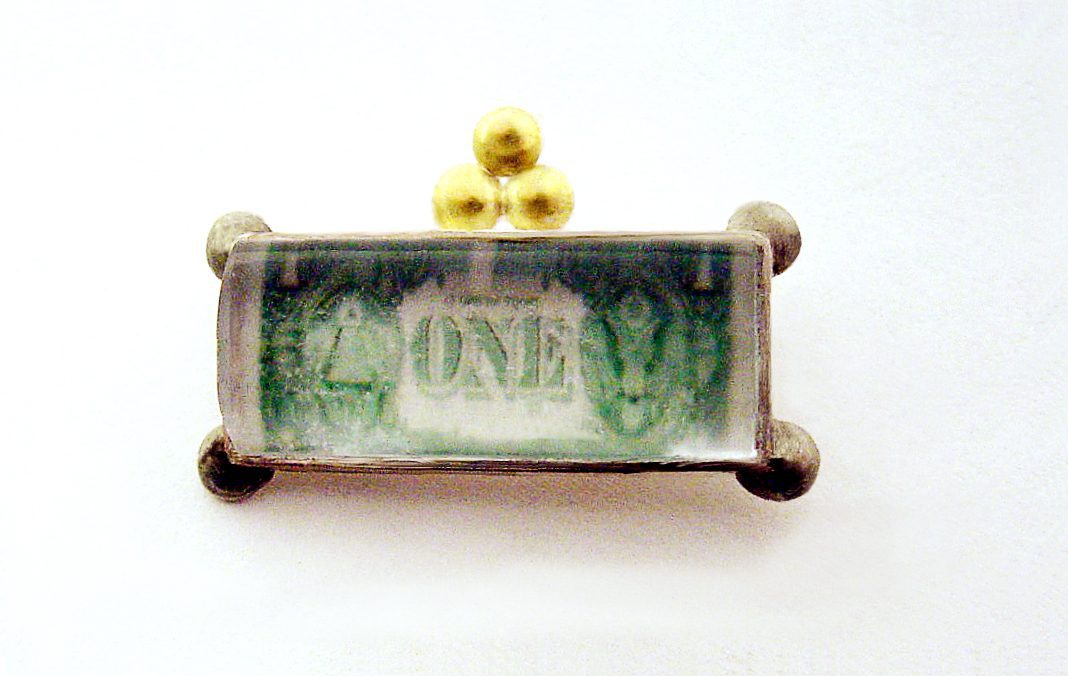

Factual, Fictional, Virtual, 2000: found silver pearl ring, copies of that ring: sterling silver, needle pin tops, Jade, carnelian, lapis lazuli, Chrisophrase, amber, turquoise

Eye for Eye, hairpin, 2015, st.silver, nickel silver, cut coins, bullet case
The Placebo Object explores how belief and perception lead to tangible effects in our lives. Inspired by the placebo effect, where people experience real improvements simply by believing they are receiving treatment, this concept extends to the power certain objects hold. Whether it’s a lucky charm, a talisman, emblems, or culturally significant items like crystals, these objects can influence our mindset and physical performance.
When we look at objects, we’re not just seeing their physical form; we’re also interpreting their symbolism, history, and cultural significance. This subconscious process is influenced by our personal experiences, societal context, and collective memory.
Placebo objects, like an auntie’s wedding band or a cross pendant, demonstrate how deeply personal beliefs and experiences imbue items with power. These objects gain significance through personal connections, memories, and cultural context, influencing the well-being and personal memory of the person carrying them.
On a broader scale, symbols like Jesus on the cross, the swastika (in its original, pre-Nazi context), and the Spear of Destiny show how objects can hold profound power and meaning within cultures. These symbols carry collective beliefs and values that transcend individual experiences, shaping societal norms and behaviours.
Additionally, some objects seem to haunt or empower individuals, like the infamous “Cursed Diamond” or the mysterious “Spear of Destiny.” These objects add another layer of intrigue, as their perceived power can cause significant emotional and psychological effects, further blurring the lines between belief, perception, and reality.
In a world where value is often measured in financial terms, The Placebo Object highlights the intrinsic nature of value itself and challenges us to reconsider what truly holds power and significance in our lives. It underscores how our beliefs shape our experiences and the profound psychological impact these objects have on our perceptions.
The famous Diamond Necklace affair, worth 1.6 million livres (approximately US$15 million today), severely tarnished Queen Marie Antoinette’s reputation, despite questions about her lack of involvement. This misperception fueled public outrage and was a significant catalyst that fueled the French Revolution.
Similarly, Donald Trump’s repeated false claims about election fraud in the 2020 presidential election have profoundly influenced his supporters, leading to widespread belief in these unfounded allegations. This has fueled political division and led to significant events such as the Capitol riot on January 6, 2021.
These examples highlight how powerful and volatile reinforced perception can be in driving significant societal and political changes.
Misconceptions have the power to shape history, whether in 18th-century France or contemporary politics, illustrating the transformative impact of public perception.
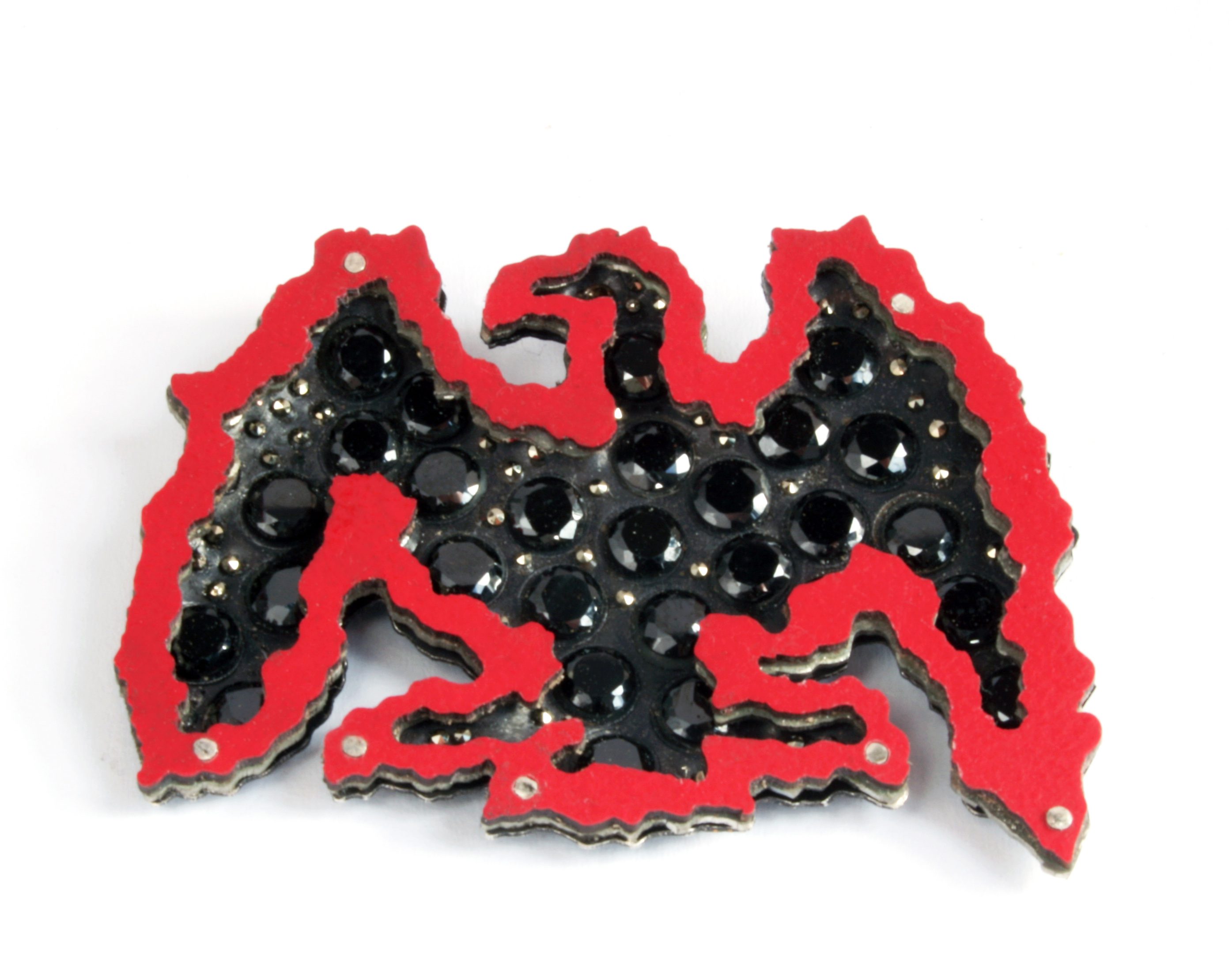

Stars and Stripes, brooch, nickel silver, paua
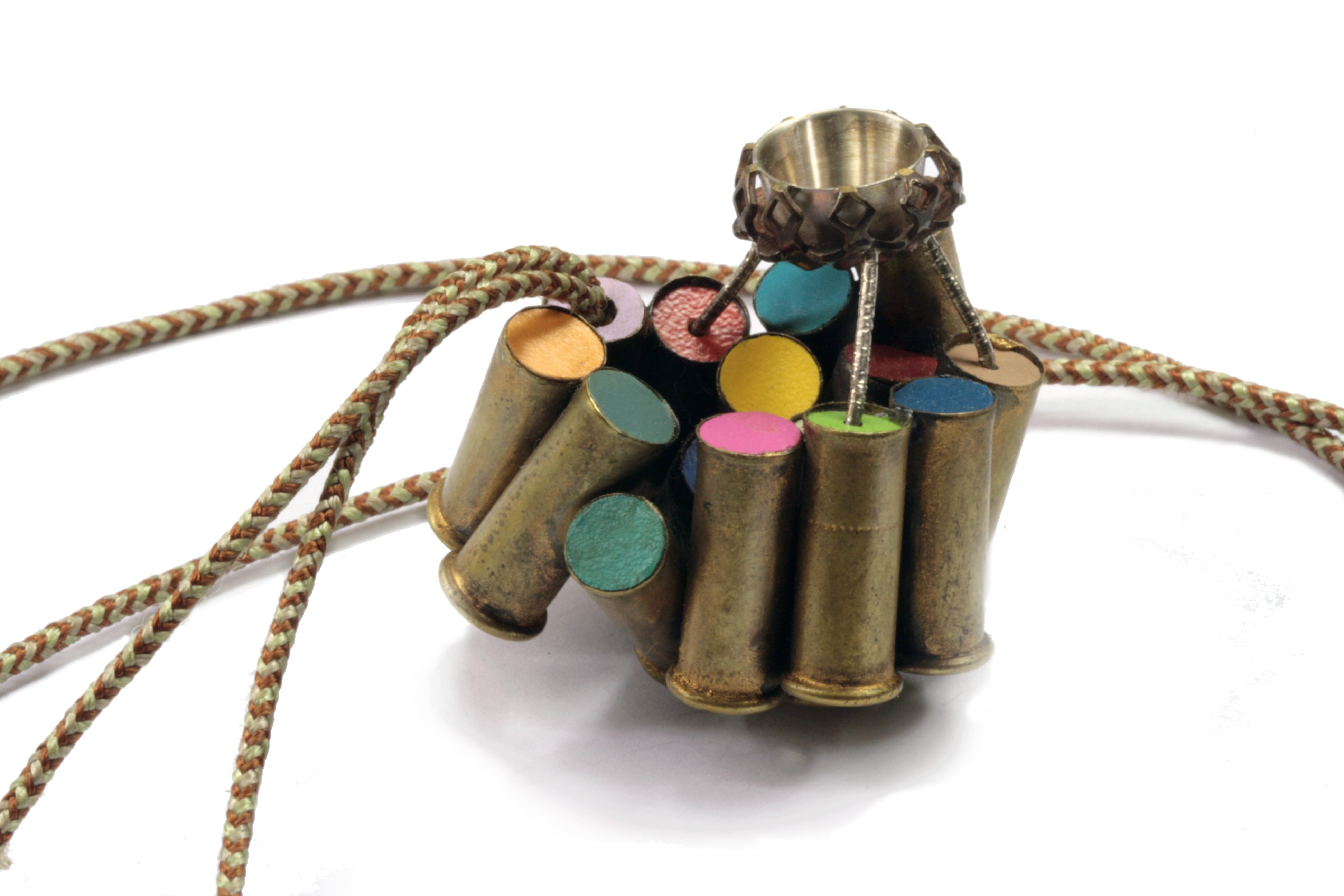
Piece (Peace) Makers, necklace, 2017, bullet cases, laminates, bronze, st.silver, braiding silk