
Environment by Stevan Eldred-Grigg
Peter is not an environmentalist in the organisational sense. He doesn’t belong to activist groups or live in a more than moderately eco-conscious way. Yet, his work centres on the world’s struggle with human-caused damage. He sees the physical environment as a battleground, especially when he walks through the bush around his house, where trees silently fight for rain and light. Left alone, species find their balance, but human technology has disrupted this equilibrium, as seen in global warming and its impacts like melting Siberian permafrost, wild weather, and toxic algae blooms in New Zealand’s rivers.
“Balance”, he believes, “will be restored by nature’s own power”. Environmentalists often distinguish between natural and unnatural, organic and inorganic, wholesome and synthetic, despite where the borders end. The complexity here fascinates him. Synthetics come from natural materials, like oil from rotted wood. Plastics and nylons will decay over millennia; however, he sees nature as an unstoppable force. This victory, though, will be too lengthy or hostile for humans in their artificial borders.
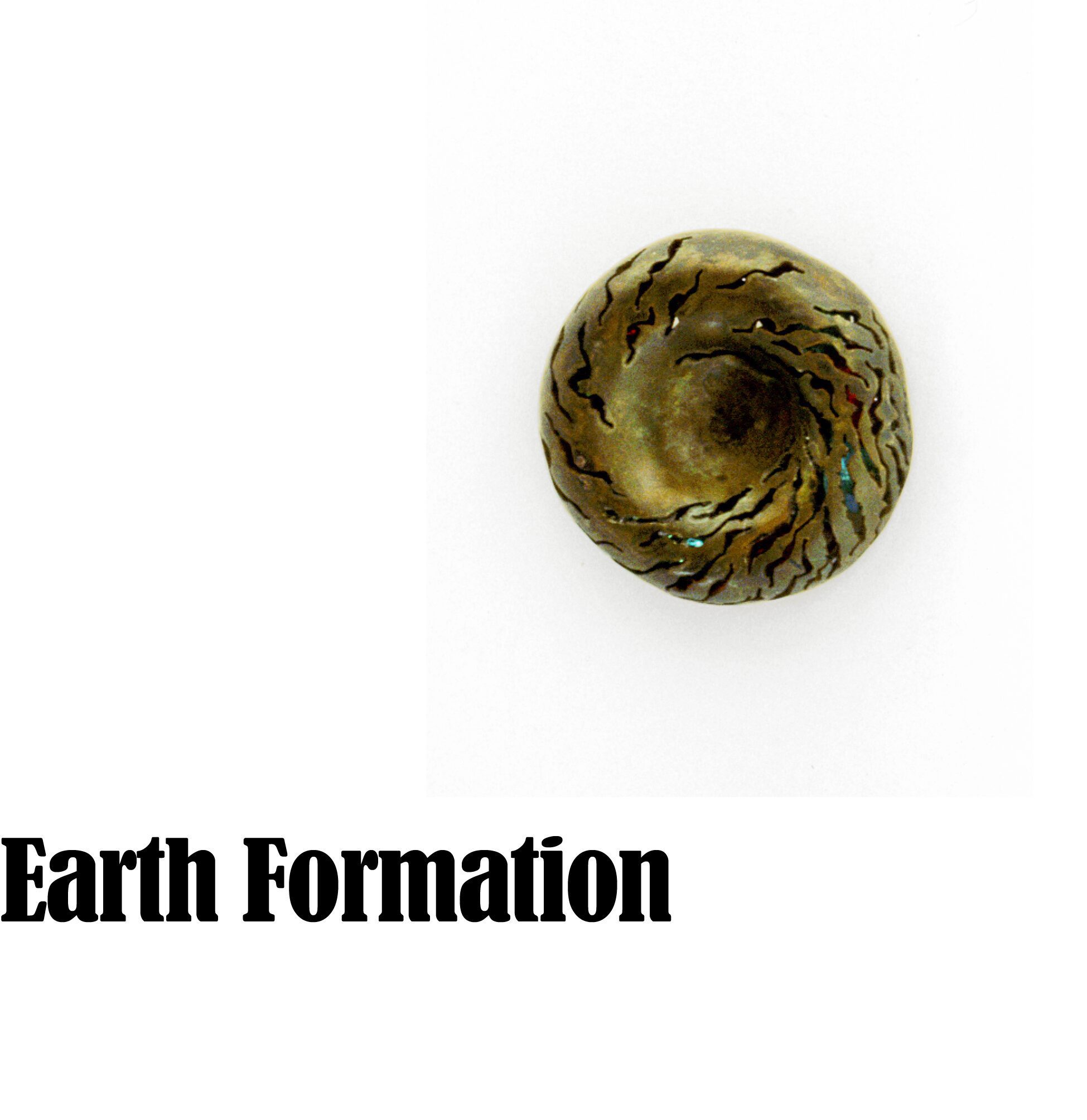
Earth could evolve into a stormy, heated planet, akin to Venus—natural but violent. This would be catastrophic for humans but ordinary in the universe’s vast, throbbing rhythm.
“Looking at things locally, though, it would be a pity for the human race if it disappeared,” he says with a wistful smile. “We make wonderful art!” He sees us as a highly evolved species capable of further evolution. Subtle solutions are often within reach, yet the political skill to harmonise ecosystems is lacking. The short-sightedness of democratic electoral cycles and the narrow focus of scientific disciplines hinder us. Artists, he believes, offer a broader, more delicate vision. “Will they do it? Will our species work it out? I’m optimistic!” he laughs.
His optimism stems from a belief in universal interconnectedness, influenced by quantum theory. He envisions waves of energy unifying apparent opposites, making everything equally significant and insignificant. An artist is both a creator and a fleeting pulse in the vast energy field. “I’m absolutely convinced that everything is connected,” he asserts. Modern technology increasingly mirrors nature. The rhizome, with its spreading roots, symbolizes the World Wide Web, a metaphor both moving and revealing. When designing jewellery, he often thinks in terms of rhizomic clusters.
The environment’s interconnectedness, balance, and contrasts hold a deep fascination. We cherish nature’s mild, serene aspects but grow bored with continuous calm. Environmental violence is vital to our identity; storms and earthquakes stir our emotions. Beauty and peace can be found in nature’s brutality. His work explores these contradictions, revealing the grace of a cyclone seen from space or the calmness of floodwaters in an abandoned house. “At first glance, I may seem like a greenie, living in the bush,” he says wryly. “But I own a car, I fly, I enjoy electronic gadgets. but above all I don’t want to live on a wild planet. It’s a dilemma. I’m puzzled. I’m amazed.”
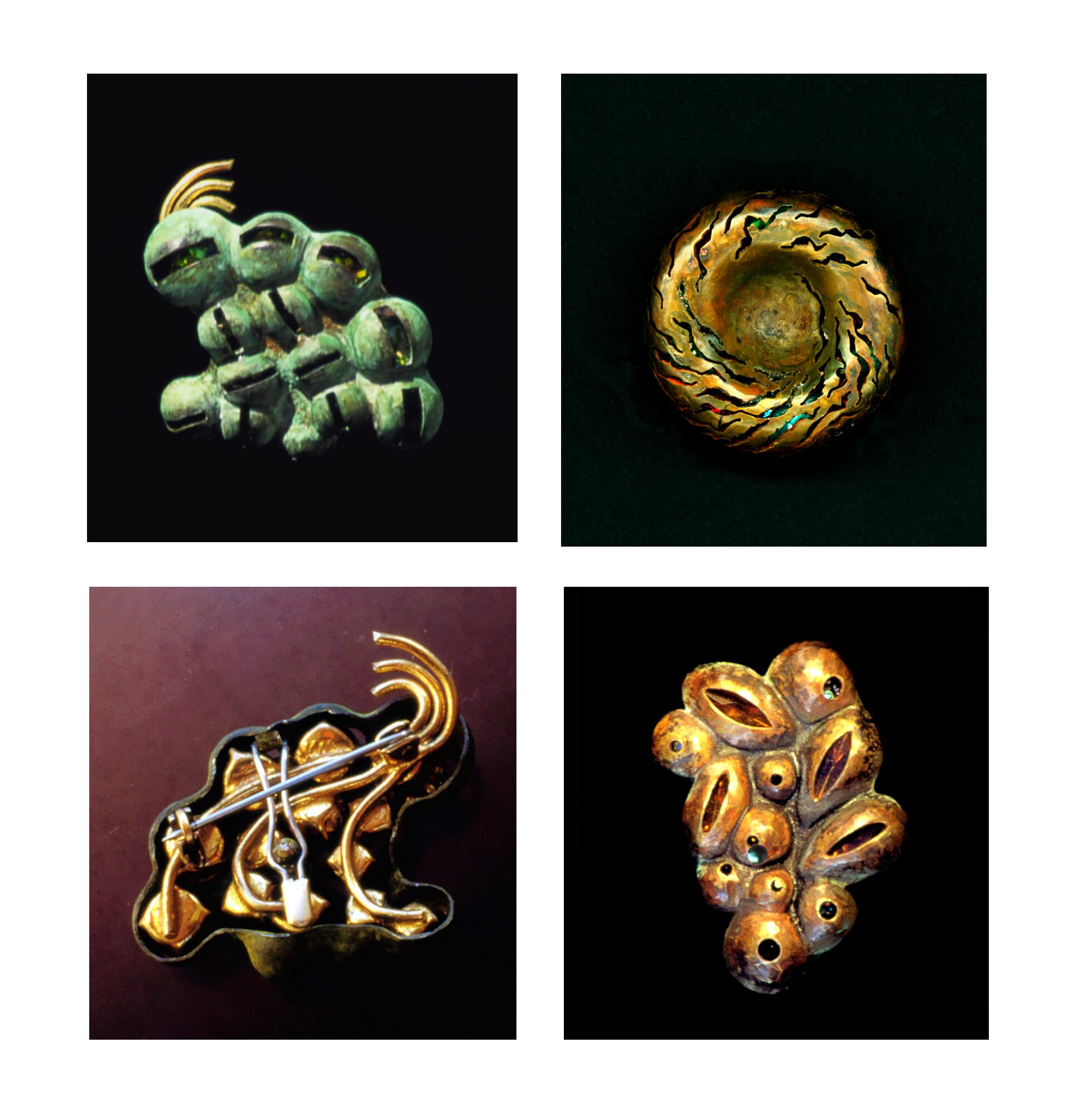
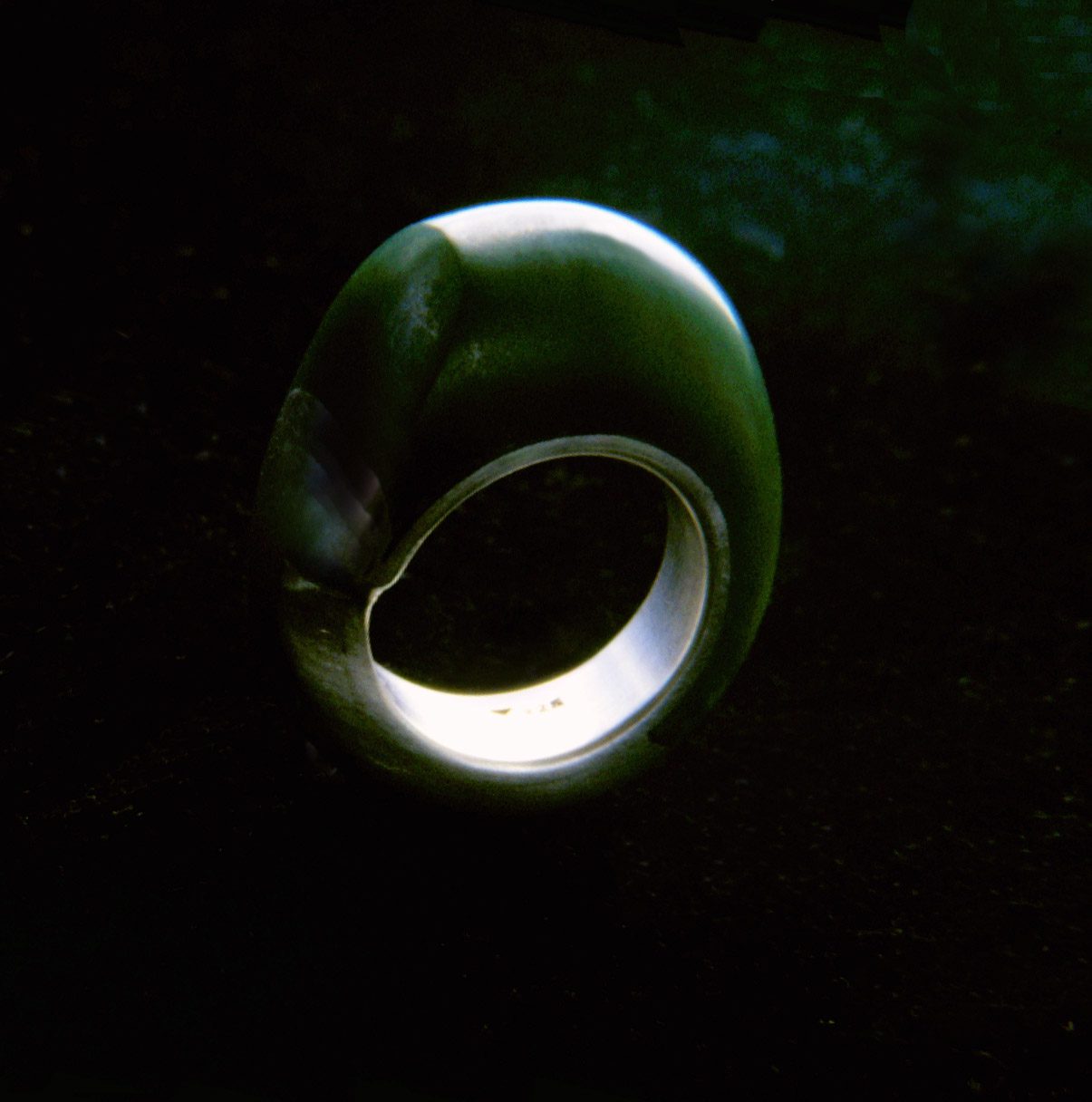
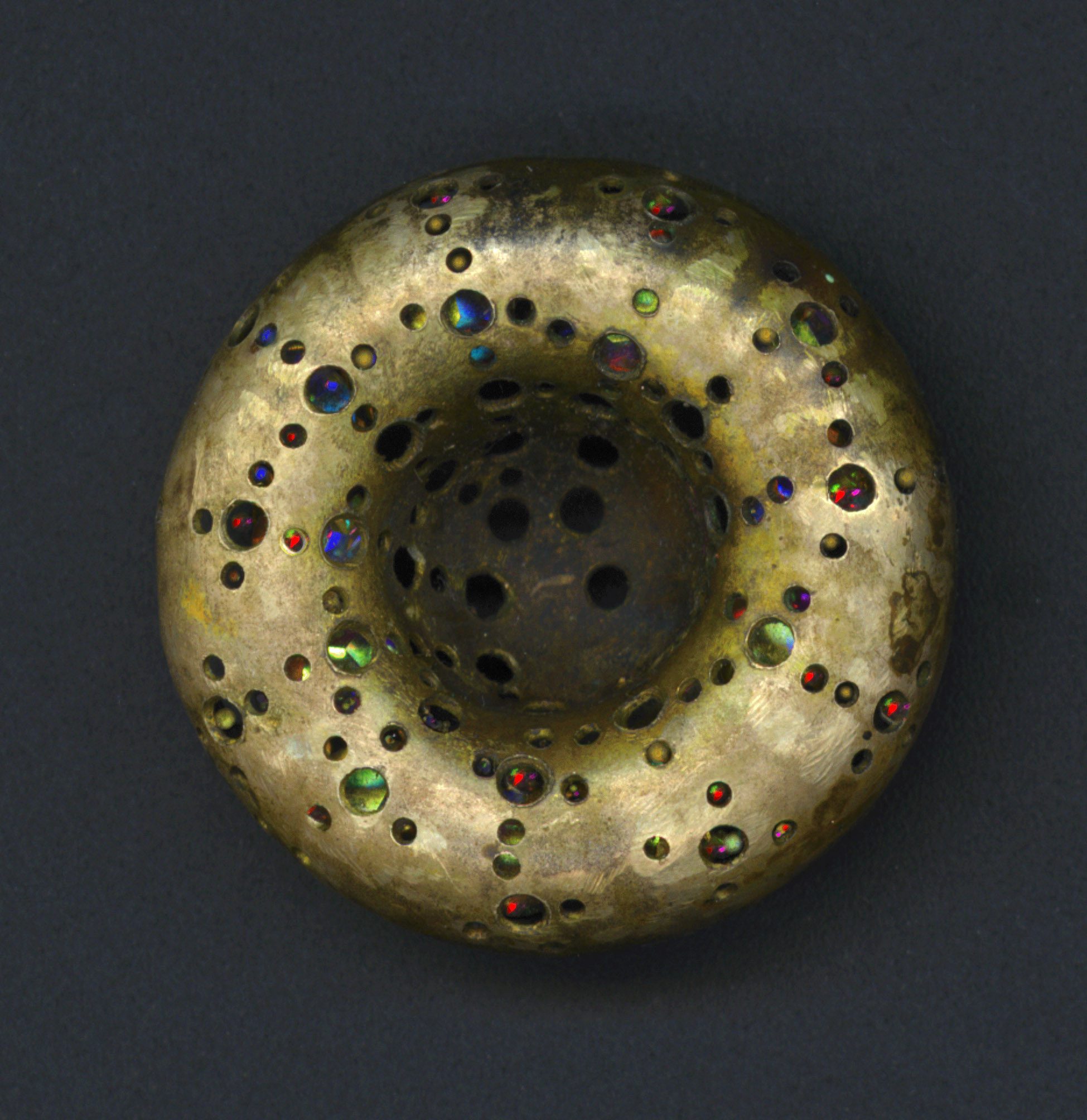
These ‘ENVIRONMENT’ topic texts by Stevan Eldred-Grigg are from: Choices of the Hand (2006)
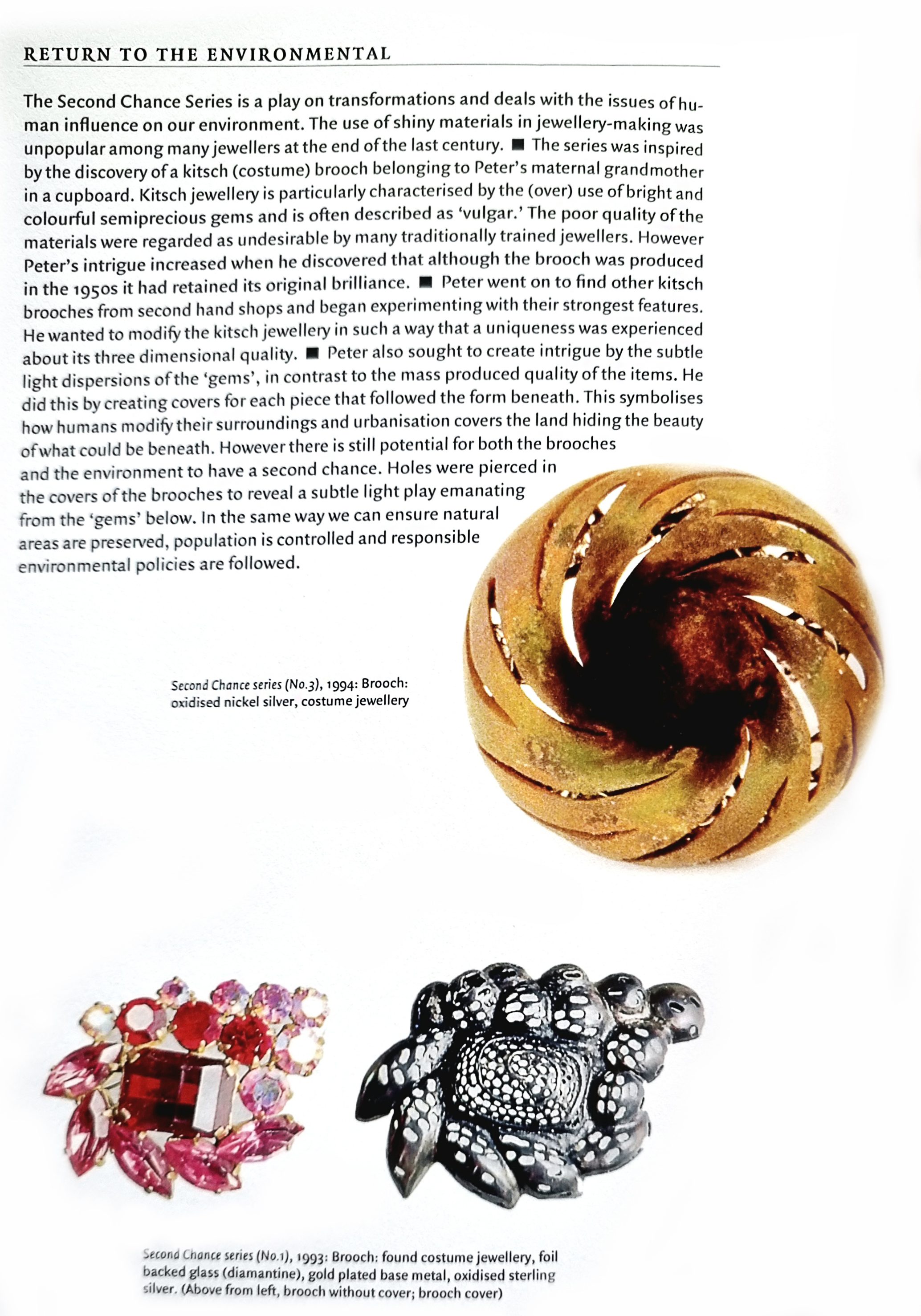
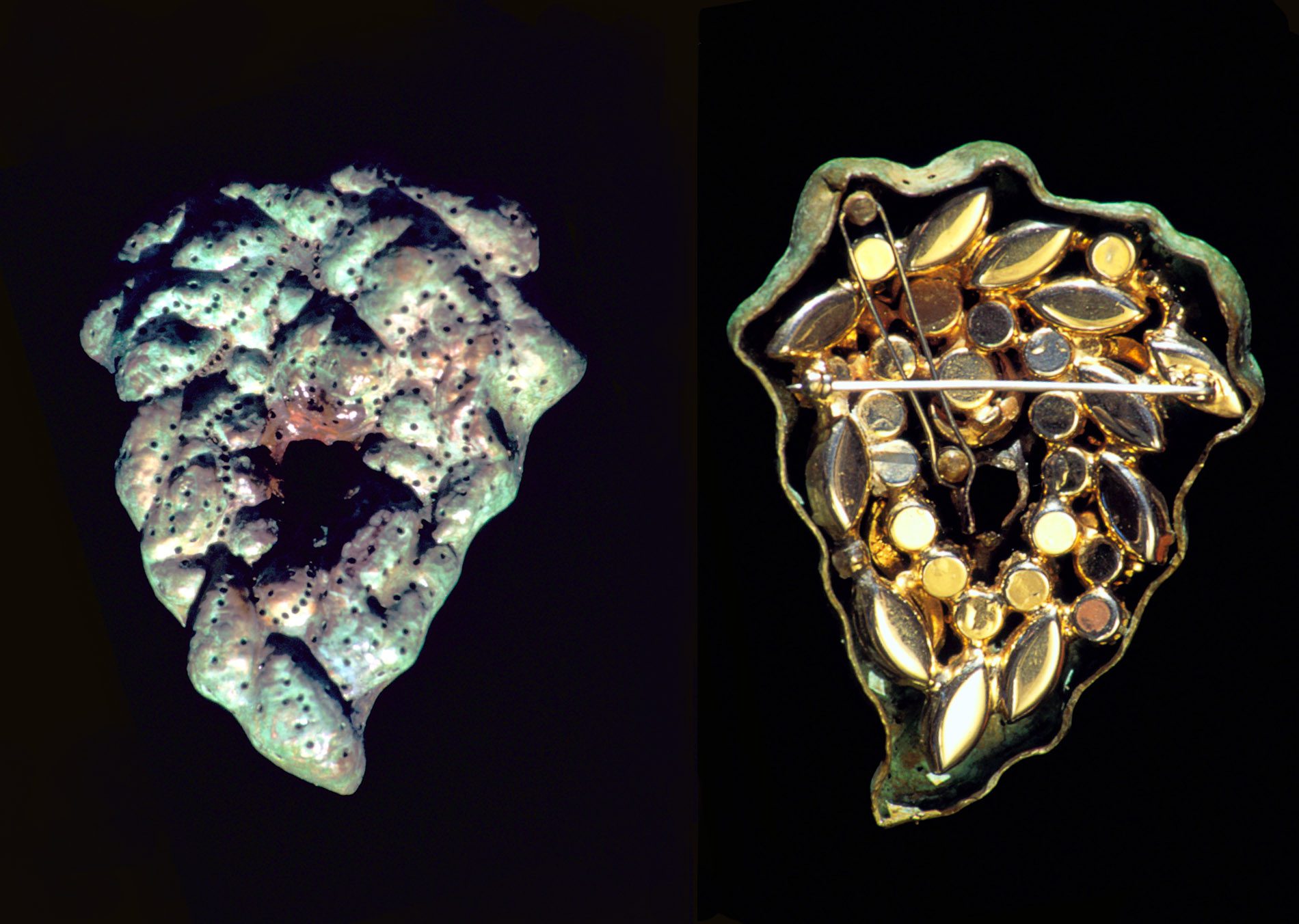


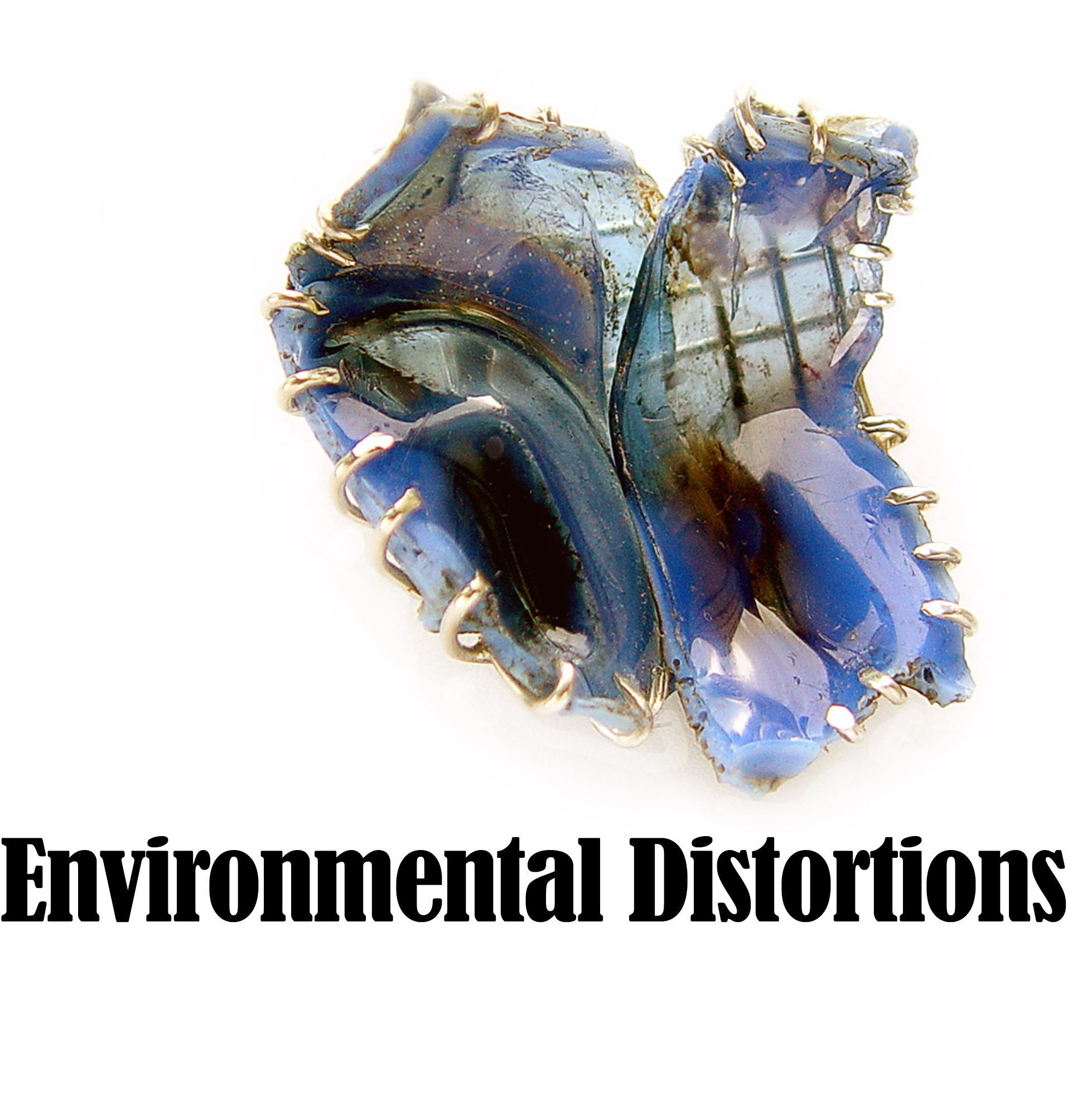
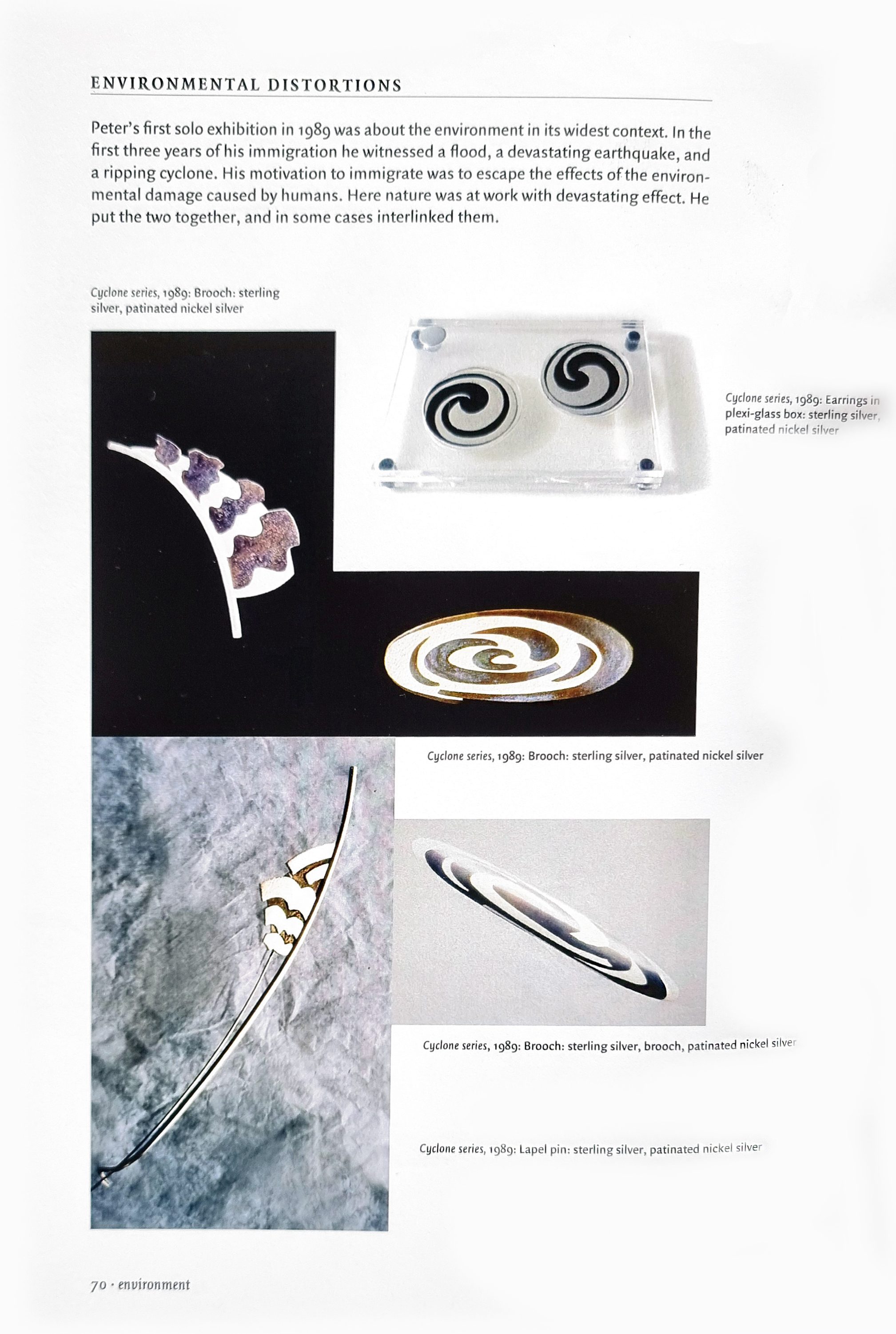
Environmental Distortions was the title of his first solo exhibition in 1989. During his first three years in New Zealand, he witnessed several significant events: the flood caused by Cyclone Bola, the Edgecumbe earthquake, the share market crash, the bombing of the Rainbow Warrior, the Tarawera Geyser eruption, and the continuing repercussions of the Erebus disaster. Migrating from polluted, Cold War-stricken Europe made him realise that nature’s impact is unavoidable and profound, regardless of location. The title of his exhibition encapsulated the myriad events leading to natural and man-made disasters, a testament to the unpredictability and resilience of life itself.
Peter’s journey is akin to a cascade of seemingly chaotic events that shape his path in the most unpredictable ways. Environmental factors, whether disturbances or beneficial changes, mirror the randomness and resilience of human life. Peter’s story vividly illustrates this phenomenon.
Environmental distortions, such as climate change, political, and ecological incidents and accidents, have undeniably negative impacts. However, nature also surprises us with positive transformations. Much like the unpredictability of our surroundings, human life is filled with unplanned moments that steer us in new directions. Each person’s path is littered with incidents, surprises, interferences, and modifications—elements that some might perceive as disturbances but are intrinsic to the human experience.
Peter’s life is a tapestry of unforeseen events, underscoring the beauty of this unpredictability. At 17, whilst on his bike, he had an epiphany: his future career should avoid language and be something he could pursue globally. Two years later, on the same spot, fate introduced him to jewellery-making through his new friend, Niek van Driel. Captivated by the craft, Peter began his studies at Vakschool Schoonhoven and later saw an apprenticeship opportunity in Wellington, New Zealand. Although he initially decided against moving, his desire to explore NZ lingered.
During his art study and apprenticeship in The Hague, an unexpected connection with a street led him to the home of his future wife, Hilda. They married and sought adventures beyond the polluted and Cold War-stricken Netherlands. A whimsical incident involving the transportation of mannequins in his old Triumph Spitfire led to a serendipitous encounter with an old colleague friend who lived in New Zealand. This meeting rekindled Peter’s vision of moving there.
That friend, Ted Daniels, showcased New Zealand’s openness to opportunities to Peter in 1985. Encouraged by the favourable conditions in Wellington, Peter and Hilda moved there, beginning their jewellery art business in Paekākāriki. Peter and Hilda’s ultimate epiphany occurred separately during an excursion to the Hutt Valley, where a specific spot in the nothern hills resonated deeply with them. Five years later, they built their workshop and house on that very spot.
Peter’s experiences are a testament to life’s serendipitous and chaotic nature, where unplanned moments often become the patterns and milestones that define our journey.
When Peter first came across some New Zealand holiday snaps in the Netherlands, he did not know that the vibrant colours were genuine and not merely a discolouration of a photo film. These snapshots from the volcanic plateau, with its numerous active geysers and mud pools, were quite surreal. Living in New Zealand is akin to living with and by nature. The overwhelming beauty of New Zealand has fostered a lasting relationship with many of its citizens. Numerous artists are inspired by the diverse landscapes found within short distances.


The many faces of BORDERS: history, impact, and human experience

Borders have long divided lands, people, and ideas. They encapsulate the complexities of our world, reflecting themes of division, conflict, and belonging while illustrating the historical narratives that underpin territorial claims and migrations. These constructs shape not only physical landscapes but also human experiences and identities, including the psychological barriers that can arise within communities. The concept of borders extends beyond geographic lines to include mental boundaries that influence how individuals perceive themselves and others. In the modern era, digital borders, such as China’s Great Firewall, further demonstrate how technological controls can restrict access to information and shape public discourse. From ancient empires to contemporary disputes, the interplay of physical and mental borders reveals how these tools can both connect and segregate communities, influencing socioeconomic disparities and individual freedoms. Ultimately, it seems we grapple with a deep-seated issue within the human DNA regarding ownership and the tendency to draw fortified defences around ourselves and our communities.
The Nature of Natural and Synthetic Materials: Unveiling Their Hidden Force
Materiality
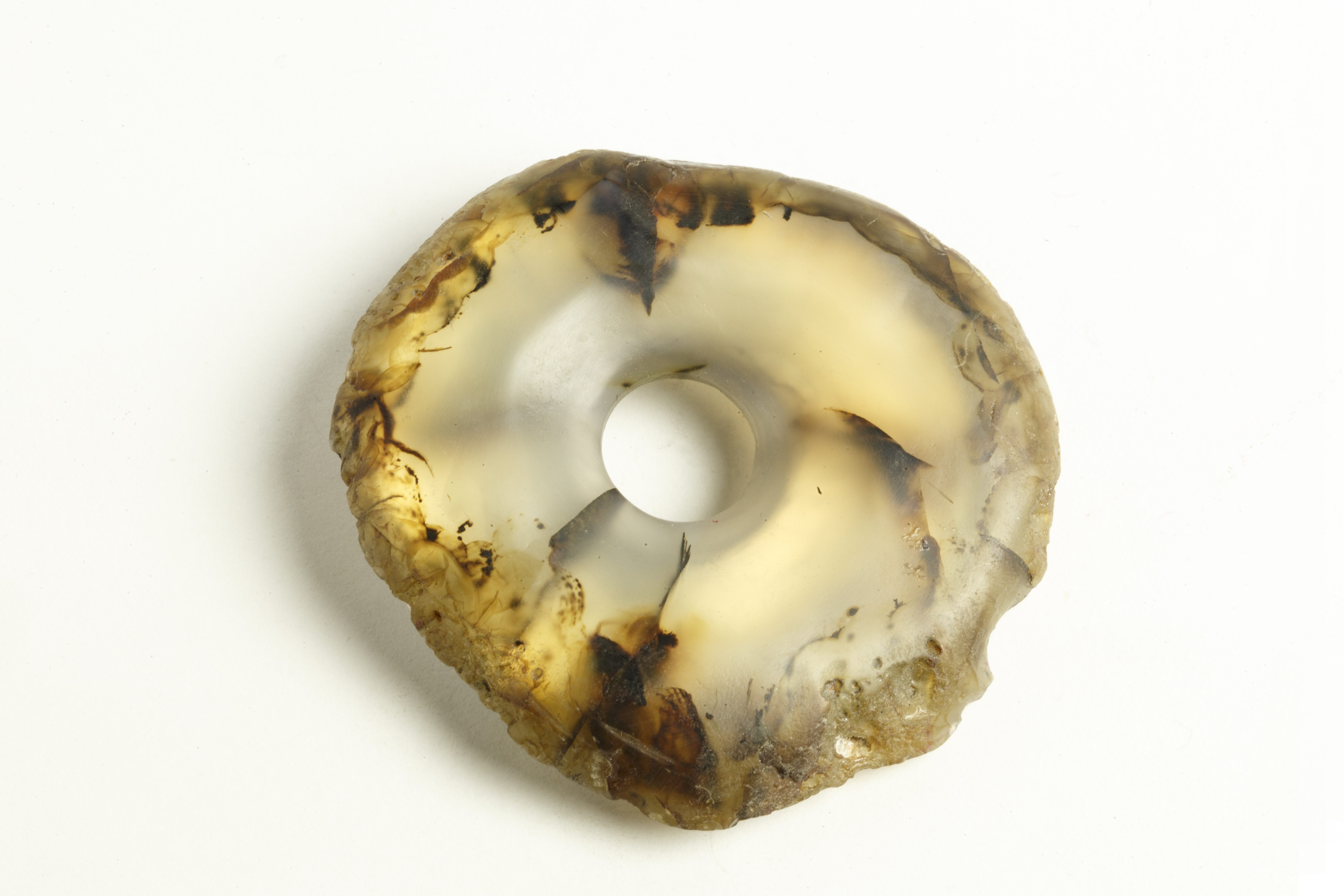
In my jewellery-making practice, the concept of “Materiality” is essential. I explore both synthetic and natural materials to uncover their inherent qualities, finding meaning through the processes of transforming “Materials into Ideas” and “Ideas into Materials.”
By utilising lab-made equivalents, I aim to protest unethical and unsustainable practices while raising awareness about environmental and political issues.
There is no hierarchical order in the use of materials to enhance authenticity. I incorporate locally sourced and found materials, such as carved and raw rocks, synthetic gemstones, and low-value minerals. Additionally, I use discarded objects, durable materials like cat hair, carbon from motors, discarded plastics, e-waste, and recycled metals, including aluminium and brass, as well as old jewellery and distressed timber. These unconventional combinations challenge traditional notions of beauty and value, encouraging
My creative process is fuelled by adventure and surprise, as I aim to blend materials and content with a focus on environmental and political consciousness, alongside artistic innovation.
Lab-Grown Stones, series
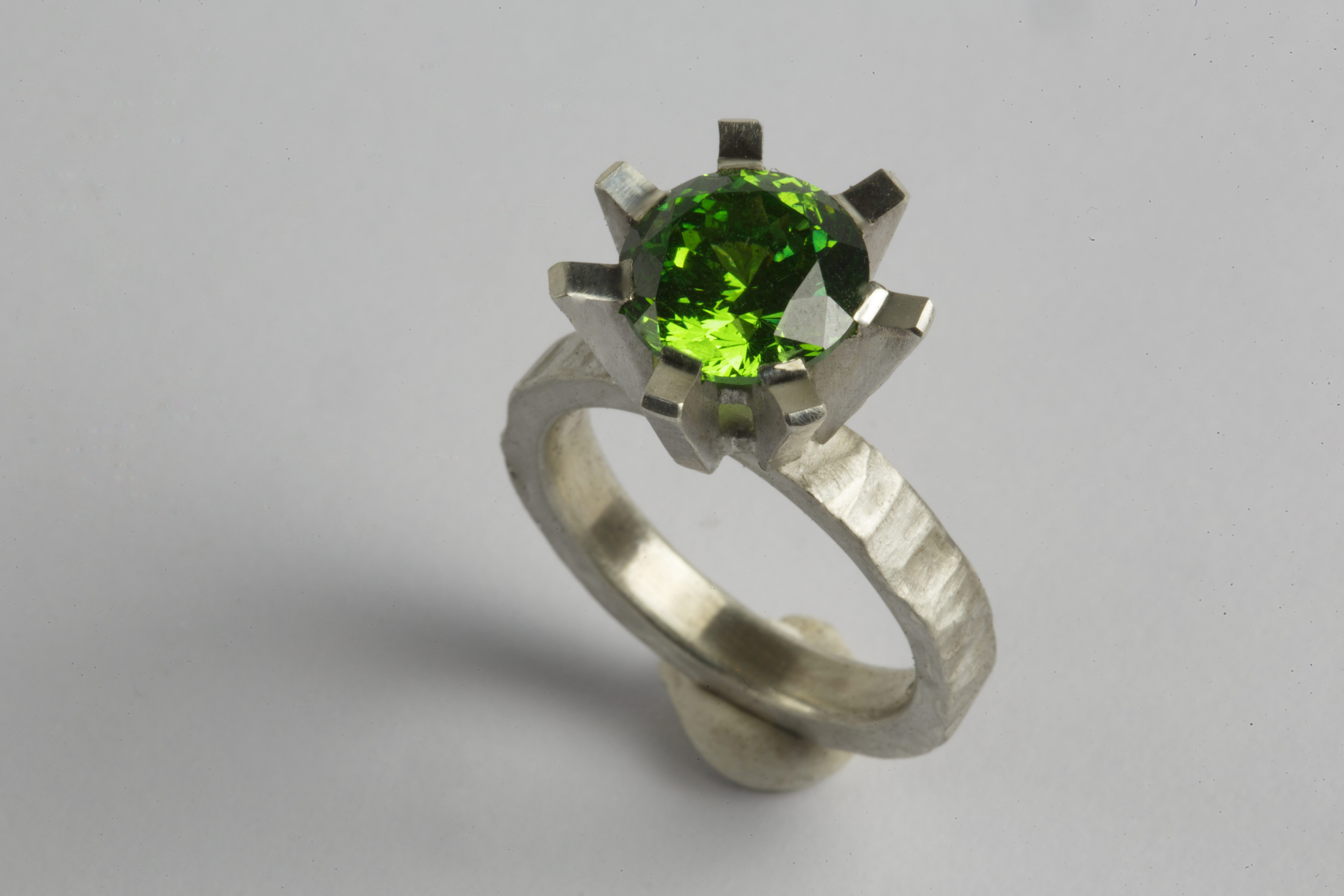
In contemporary jewellery, which defies traditional material constraints, I use lab-made gemstones over natural ones. These lab-created stones mirror the quality of natural gems and represent a commitment to ethical artistry, opposing an industry rife with unethical practices. For over 40 years, I’ve used gemstones for their contextual quality, now celebrating how light transforms through facetted gemstones. Lab-made gems offer a dazzling, affordable alternative. They mimic natural stones so closely that even experts struggle to tell them apart. Historically, synthetic alternatives like Cubic Zirconia have aimed to provide ethical beauty. Lab-created gems, formed by forces mimicking millions of years of natural processes, deserve recognition.
Choosing lab-made stones challenges traditional perceptions of value and authenticity, often manipulated by the industry. As an artist, I reconsider what might or not be true value. Rejecting unethical practices and the use of recycled materials, my work supports a more sustainable future where beauty and integrity coexist.
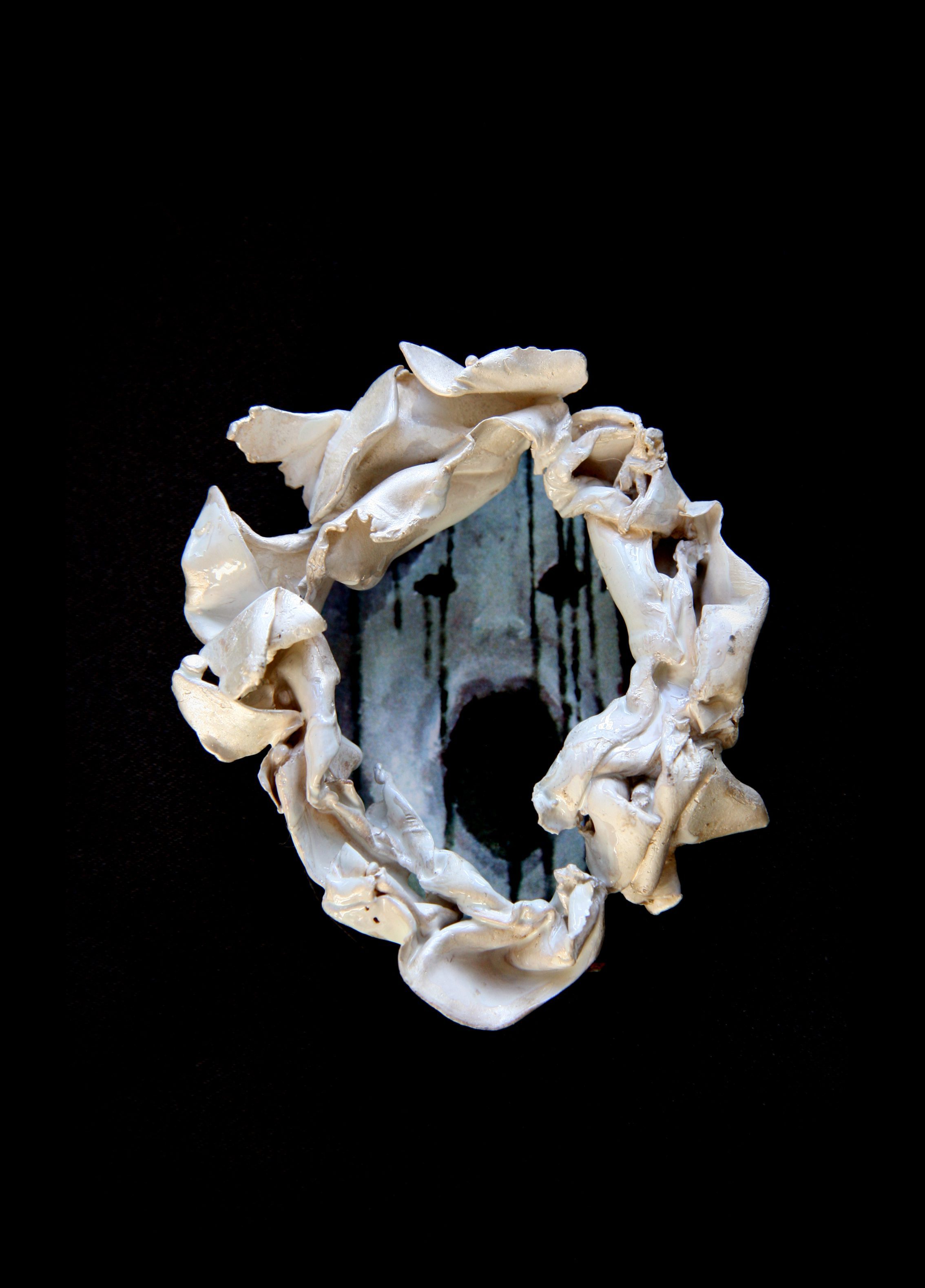
Object Power: Alchemy of the Unseen
This article, compiled by Peter, explores the profound role of material science in the dynamics of unseen forces acting on objects and materials.
It embarks on an analytical journey through hidden dimensions where scientific principles converge with cultural contexts and personal experiences.
The exploration blends scientific focus and diverse research with real-life experiences, remaining enigmatic yet integral to our reality.
These intersections highlight the mysterious attributes that endow objects with their remarkable, yet often unexplained, power.
This exploration uncovers an undeniable, unseen force—one that is a fact of life, woven into our daily existence.