
Unravelling Why My Practice Is My Practice
My practice has never been about fame, style, mastery, or the performance of technique. Technique, for me, is not a display but a surrender — a willingness to stop seeing everything, to step away from the battlefield of control, and to search instead for solutions that belong to the moment itself. As I often remind myself:
“Mastery isn’t the point. What matters is the moment I surrendered to the work.”
Happy accidents sit at the centre of this approach. They are the small ruptures where something unexpected slips through. But the more one practices, the fewer of these accidents occur. Skill tightens the world. Familiarity narrows the field. So I learned to force myself into doing things “wrong”—to disrupt my own competence, to avoid the trap of becoming analytical, predictable, or efficient.
“The worth of a piece is not in how right it is, but in how far it wanders.”
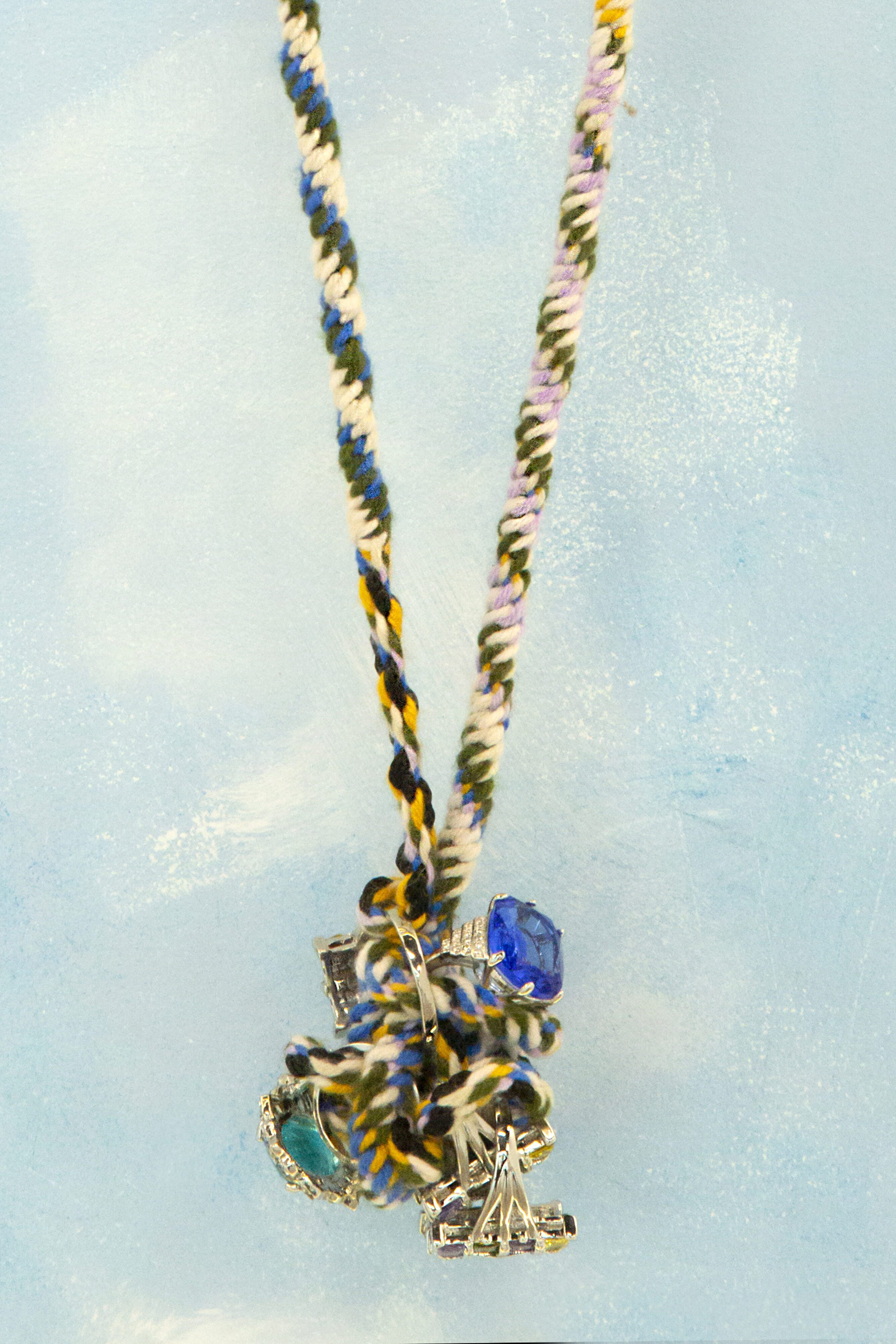
Lately, I’ve even experimented with the opposite: total control, pushed so far that it collapses into its own absurdity and opens a new path — much like my Kumihimo braiding, where perfect tension is expected, yet my strands wander off, creating surprises I could never plan.
When I was studying, everything felt wide open. Exploration was natural. But as art became “serious,” the space was expected to narrow. Modernism, at its core, is a tightening machine—refining, reducing, purifying. My intuition moved in the opposite direction. I refused the narrowing. I preferred to work under the radar, where no one asked me to repeat myself or maintain a house style.
“Judge the work not by its style, but by the space it opens.”
I was more interested in ideas and expressions than in recognisable signatures or the maintenance of a brand.
Stage fright, strangely, became a form of protection. It kept me from stepping into the spotlight where repetition and expectation would have closed the space around me. It allowed me to keep exploring, discovering, inventing—without the pressure to perform consistency.
“Do not judge me by the polish of the surface, but by the courage of the attempt.”
Only now do I see that my so-called “no‑style style” was not a lack but a strategy. It was the recipe for keeping things open. Obsession, for me, is not about repeating success. Success is fragile, dependent on the delicate timing of a reveal, the surprise of something emerging that I did not plan. Under pressure, I cannot rely on my processes; they tighten, they freeze, they close. So I avoid the pressure. I avoid repetition as a safeguard. I avoid the narrowing.
I am an explorer. I look around corners. I search for options, for surprises, for the happy accidents that feel like spiritual gifts—small signals that I am on the right path.
Even as a child, the world never stayed in its proper shape. In the small tub with my brother, everything became something else. The soap went inside the washing glove. The showerhead turned into a tickling machine. Light bent my fingers into tiny stumps when I closed one eye and skimmed the water from my vision. The soap dish became a raft for broken toys. Nothing behaved. Nothing stayed in its assigned role. I didn’t control any of it — I simply allowed it.
That early instinct never left me. I still work that way. I still trust misbehaving materials, sideways uses, and the moments when things slip out of their labels.
“Do not ask what I control; ask what I allow.”
If nothing is happening, I don’t fight it. I give in. I follow the flow. That surrender takes me to deeper connections, deeper thoughts, and into the poetic openness where the work begins to breathe again.
My interest is always to widen the space. To stay porous. To respond to what the world is doing. I am a protester when protest is needed. A messenger when the message lands. A maker of beauty when beauty is the only way to reflect the ugliness around us.
Only now do I understand that my “no‑style style” is not an accident—it is my salvation. It could never have been planned. It could only be discovered through years of trial, error, avoidance, surrender, and intuition. Only now does it make sense.