
The Pleasure Beast: in Moving Targets, 2010
“Cruelty is the deliberate infliction of physical or psychological pain on other living creatures, sometimes indifferently, but often with delight. Though cruelty is an overwhelming presence in the world, there is no neurobiological or psychological explanation for its ubiquity and reward value” (Victor Nell, 2006).
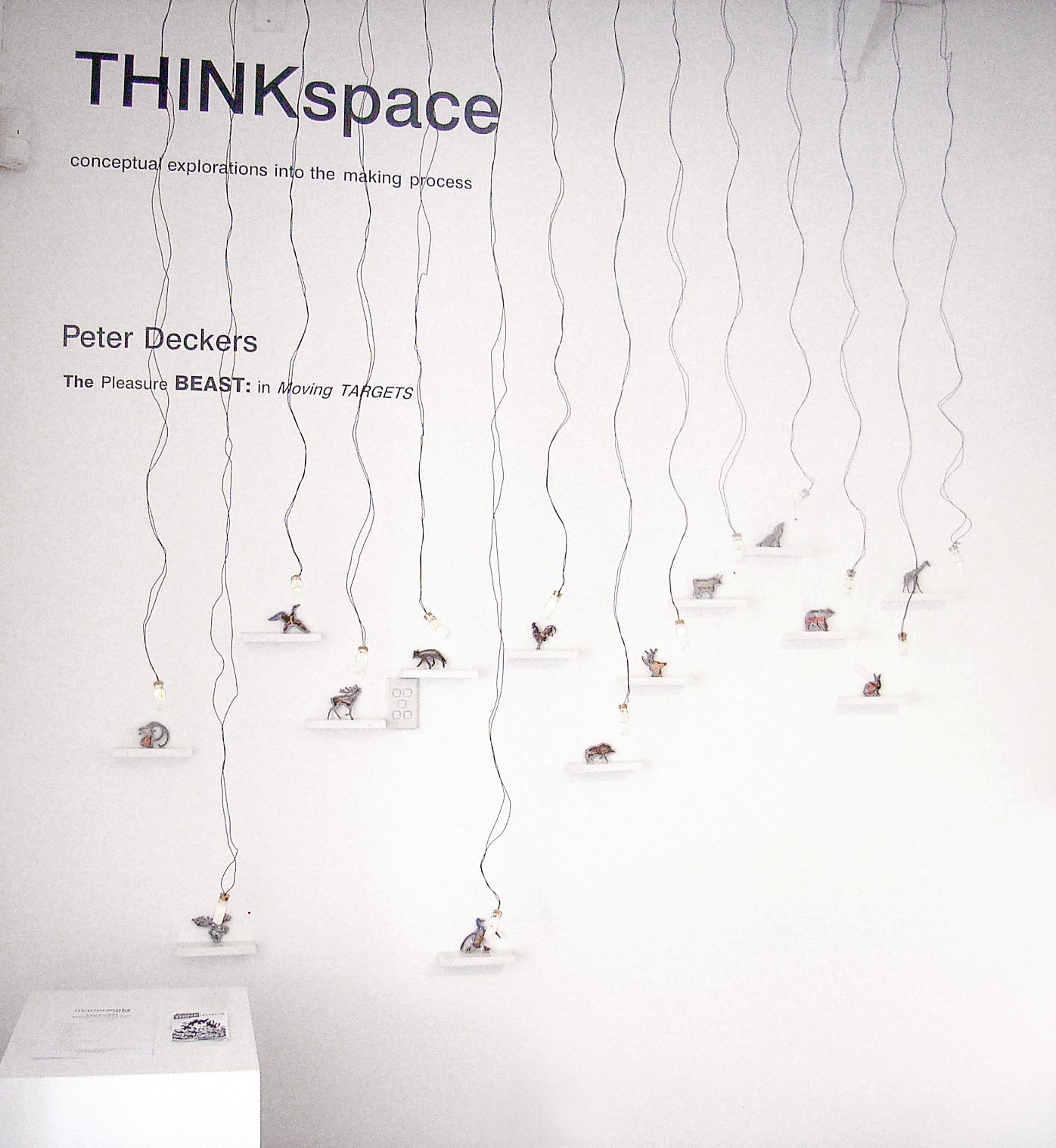


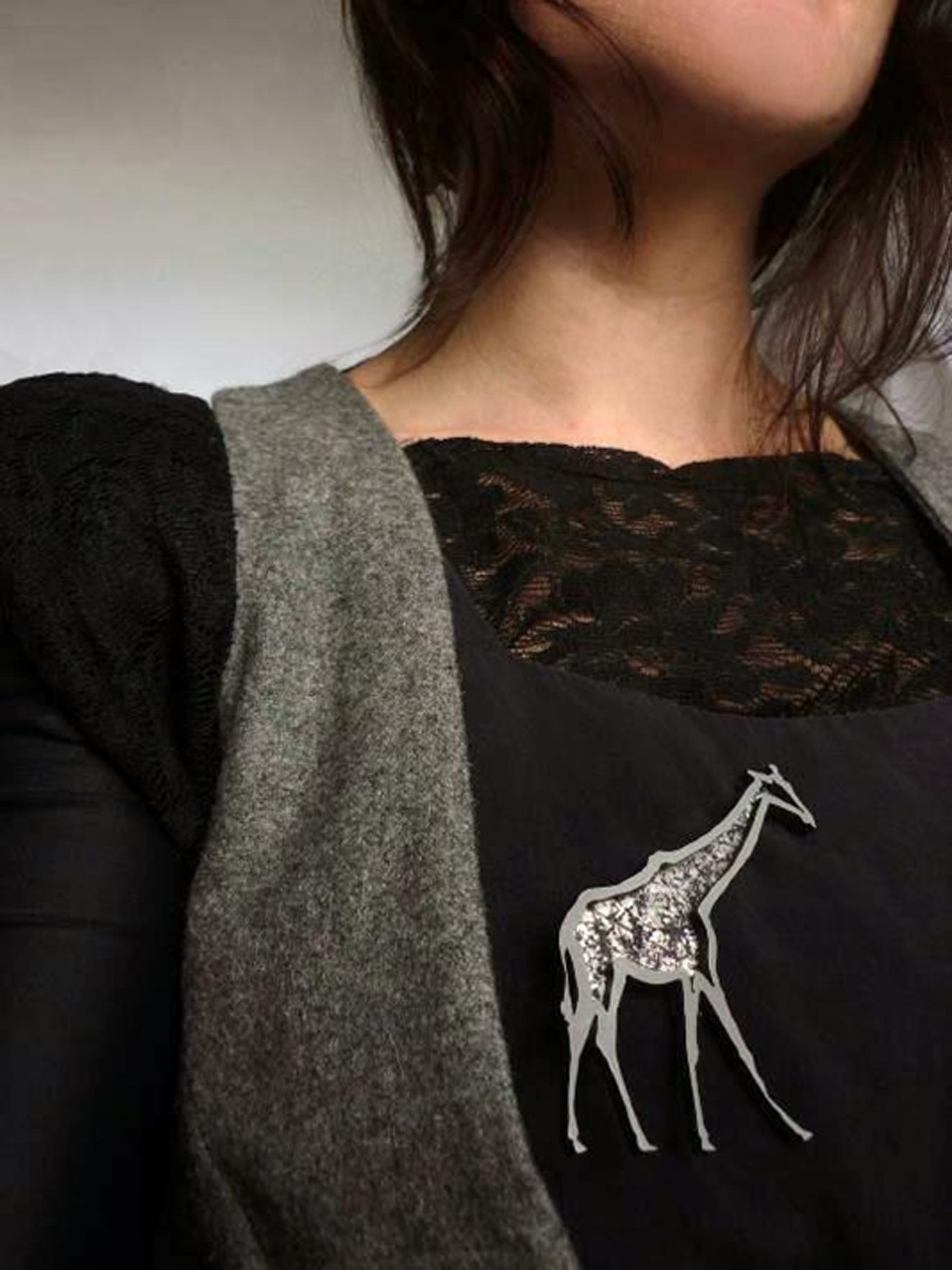


Brooches: Aluminium, vinyl, transfer print, sterling silver
Installation: Empty double-barrel shotgun cases, 12V lights
The Pleasure Beast: In Moving Targets explores the ethical tensions surrounding the killing of animals for sport.
This body of work pays tribute to the lives of animals hunted for pleasure—innocent beings caught in the crosshairs of human entertainment. Each piece of jewellery is shaped in response to their bodies, offering them imagined sanctuaries: intimate, internal spaces adorned with fragments of paintings by celebrated artists.
Hunting, once a means of survival, has long since evolved. While the need to hunt for food has diminished, the instinct persists—manifesting in competitive sports, entertainment, and acts of violence. The cultivation, slaughter, and commodification of animals have been obscured by the machinery of farms, factory floors, and financial markets. The spectacle of killing has shifted, but its logic endures.
French Jesuit priest and philosopher Pierre Teilhard de Chardin proposed that the history of the earth reflects a gradual unfolding of matter and energy— culminating in human consciousness. From inanimate matter to complex life, this evolutionary arc, he argued, moves toward what he called the Omega Point: a state of heightened social and moral awareness.
Yet when we examine the violent history of humanity, progress appears uneven. In ancient Rome, cruelty was institutionalised through state-sponsored spectacles—mock battles that ended in real death. Over time, the killings became simulations, but the appetite for brutality remained.
From the Renaissance to the Enlightenment, through revolutions, wars, and philosophical awakenings, we have inched toward more humane ideals. And yet, the tribal instincts of the past still echo in the present. The line between punishment and entertainment blurs in moments of collective frenzy—football riots, acts of vengeance, or the bloodlust of the crowd.
In 404 AD, the monk Telemachus leapt into a Roman arena to protest the violence and was stoned to death by spectators. Similar instincts surface in bullfighting arenas, where audiences may erupt in fury if denied the spectacle of death. As Hemingway once wrote, the crowd may “swarm on [the bull] with knives, daggers, butcher knives and rocks… until he sways and goes down.”
Yet within us lies the potential for compassion. A thoughtful, open-hearted person can discern right from wrong, even as that discernment is shaped by culture, politics, and circumstance. In democratic societies, we no longer permit the torture of humans or animals as public spectacle. If we are to move beyond our primitive inheritance, we must choose to disarm—not only our weapons, but our indifference. Moral courage arises when we resist cruelty, even when it is sanctioned or disguised as tradition.
In dialogue with my earlier works—Shut-Up and Great Known to Man, series, Acoustic Tile, Dove Poo, and Chornobyl Mourning Jewellery—each confronting injustice through human conflict, politics, and ecological disaster, The Pleasure Beast shifts the focus. Where those projects memorialised war, silenced voices, and fractured societies, this work turns its gaze toward the spectacle of killing animals for entertainment. Here, humans themselves become the wild Beast, exposing how pleasure in violence denies the very possibility of moral progress. Not at all aimed at Teilhard de Chardin’s Omega Point, this project insists instead that animals are part of our moral community, and that their lives deserve remembrance and protection. In this way, the work extends my commitment to exposing cruelty, resisting indifference, and offering art as a site of care, critique, and ethical imagination.
In the face of these enduring patterns of violence and spectacle, even the smallest acts of care can become meaningful interventions. This body of work—and the act of wearing it—offers a quiet gesture toward that resistance. It is a call for kindness, a wearable memorial, and a reminder of our responsibility to all living beings.


Includes a Paul Jackson Pollock painting detail


Includes a Vincent van Gogh painting detail (Mulberry Tree, 1889)


Includes a Vincent van Gogh painting detail (Mulberry Tree, 1889)


Includes a Toss Waoollaston painting detail


Includes a J.M.W. Turner painting detail (Buttermere Lake)


Includes a Claude Monet painting detail (Farm Yard)


Includes a JMW Turner painting detail (Sunset)


Includes a John Constable painting detail


Includes a Micheal Smither painting detail


Includes a Salvador Dali painting detail (Night Specter)


Includes a Pollock painting detail


Includes Piet Mondrian painting detail (Mill Sunlight)
GIVE & TAKE, 2011
This installation was part of the Masterworks’ submission for the Auckland Art Fair 2011
The topic keeps in the middle what its political standpoint is, or what it means to kill for pleasure, but it touches on the fact that it is a celebrated sport, with a rich background dating back to our hunting and gathering society. However questions can be raised why killing for pleasure is allowed to exist in 21 century society.
The 80+ jewellery objects are all pin/brooches and are placed in a formation behind magnifying glasses to form the installation.
This installation has been created on a 3 metre wide wall and can be (partly) remade to suit the situation of the Dowse.
The shaped animal brooches are made from carved Masonite and painted with vinyl paint (backs are printed images on aluminium). The eagle silhouette brooches are modelled on the American eagle found on quarter dollar coins and host detailed images of artist Frances Bacon.


Give & Take – in Moving Targets
In 2011, GIVE and TAKE: Pleasure Beast was presented in two contexts: first as part of the Auckland Arts Festival, and then in a satellite exhibition in Wellington. Both shows addressed urgent questions of animal welfare, focusing on the troubling phenomenon of killing staged as entertainment and pleasure.
The installations confronted the persistence of hunting as spectacle — a practice once tied to survival but now reframed as leisure and sport. By translating animal forms into jewellery objects, the works asked audiences to reflect on how violence is aestheticised, commodified, and normalised in contemporary culture.
Together, the Auckland and Wellington presentations underscored the project’s central provocation: why does killing for pleasure continue to be sanctioned in the 21st century, and what does this reveal about our moral compass?


G I V E and T A K E: PLEASURE BEAST & BEAUTY PATCH
In the same year, Masterworks Gallery, Auckland hosted another installation that explored the concept of projection. Light was directed through magnifying glasses cut with the outlines of animals chosen for entertainment killings. These projected forms fell across sculpted plasticine models, creating a shifting cycle of shadows and brooches.
The installation dealt with the perception of sensation and the layering of visual experience. By combining magnified silhouettes with sculptural surfaces, the work asked audiences to consider how violence and spectacle are refracted through cultural lenses. The interplay of shadow and object created a fragile theatre of images — one that questioned how easily cruelty can be aestheticised, and how perception itself can blur the boundaries between adornment, sensation, and aggression.


DeepRoted– in Moving Targets
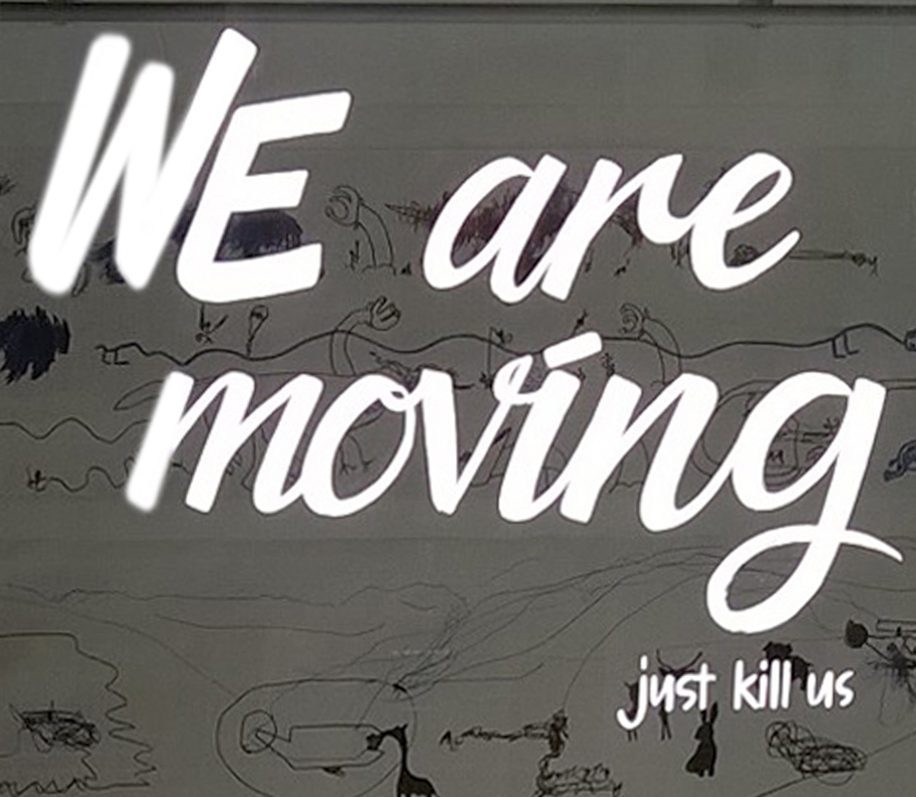
DEEP ROOTED is an installation that examines the transformation of hunting from a survival necessity to a modern symbol of success. It subtly questions the practice of killing animals for sport, contrasting our primal hunting instincts with humanity’s compassionate and advanced qualities. This installation is a collaboration between kids and adults.