
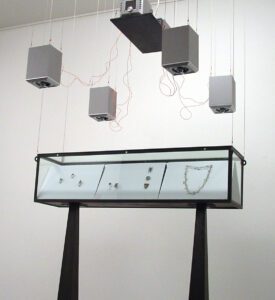
 Perception: Object Mysticism
— Presence Without Proof
Personal Reflection
Perception often begins with moments that defy explanation. Personal items can seem to bring back the dead in mysterious fashion. Mystic readers speak of sensing truths through a porthole; clocks are said to stop ticking when someone dies. In Māori tradition, signs arrive through the natural world — and I experienced this myself when a pīwakawaka (fantail bird) flew into my workshop, only for my mother‑in‑law to pass away that same day. The pīwakawaka’s sudden entry indoors is traditionally interpreted as a sign that death is near, or that it has already occurred. I was unaware of this meaning at the time, but learned it afterwards.
Not all objects are measured in gold or currency. A family heirloom — a pendant, a watch, a carved treasure — carries a value that cannot be defined by money. Its worth lies in memory, in the hands that held it before, in the stories it silently preserves. To inherit such an object is to inherit presence: the sense that those who came before remain near, woven into the material.
I felt this most strongly when I buried my mother’s ashes beneath a great lacebark tree. That tree had grown from a seed that, in 1989, had accidentally fallen from my pocket while we were meditating to bless the land we have lived on ever since. I knew it was that seed, because the hedge from which it came was diseased yet flowering, heavy with seeds. Against the odds, this lacebark thrived, becoming a living witness to our years on the land. When my mother died — she who had helped us buy the land — I buried her ashes beneath its roots, together with the ring that defined her. I could not melt it down or reuse the aquamarine stone. It belonged to her, and it needed to stay with her.
This act echoes ancient traditions. The Egyptians buried their dead with items to carry them into the next life, believing that objects could accompany the spirit across thresholds. My gesture was not ritual in the formal sense, but it carried the same conviction: that matter holds memory, that objects can embody presence, and that burial is not only about loss but about continuity.
Heirlooms, trees, rings, and seeds are not neutral possessions. They are charged with emotional gravity, binding generations together through touch, ritual, and remembrance. A ring may hold no great market price, yet it carries the weight of love, grief, and continuity. A tree may grow from an accident, yet it becomes a guardian of memory. In this way, objects become vessels of identity and belonging.
Perception, then, is not only about what can be proven, but about what is felt — the unseen threads of connection that endure through matter. Objects, signs, and memories remind us that the material world is never entirely neutral. It is charged with mystery, presence, and emotional value that resists measurement, yet continues to shape how we live, remember, and believe.
These are compelling, unscientific facts. Such beliefs confuse and unsettle, yet they bring perception to the foreground in sometimes extreme ways. They remind us that the material world is never entirely neutral, and that objects and events can carry meanings beyond proof — thresholds between experience and mystery.
Across cultures and centuries, people have encountered objects that seem to carry more than their material weight. A salvaged aircraft part, a coronation stone, a family heirloom, a carved pendant of pounamu — each has been treated as a vessel of memory, power, or spirit. The accounts are consistent enough to form a pattern: objects are never entirely inert. They are believed to protect, to curse, to confer legitimacy, or to embody ancestry. Yet despite the persistence of these experiences, no scientific framework has been able to prove that matter itself holds such energies. Object mysticism, therefore, occupies a liminal space: it exists in experience and tradition, but resists empirical verification.
Modern Case: Flight 401
In December 1972, Eastern Air Lines Flight 401 crashed in the Florida Everglades, killing more than 100 people. Salvaged components from the wreckage were installed in other aircraft. Soon afterwards, crew members reported seeing apparitions of Captain Robert Loft and Flight Engineer Donald Repo, both of whom had died in the crash. These figures were described as recognisable and, in some accounts, issued warnings about mechanical problems. The airline eventually removed the salvaged parts. Whether folklore or fact, the persistence of these reports suggests that trauma can cling to matter and that objects may carry presence beyond their physical function.
The Stone of Destiny
The Stone of Scone, or Stone of Destiny, illustrates how objects can embody legitimacy and power. Used for centuries in Scottish coronations, it was seized by Edward I in 1296 and placed beneath the Coronation Chair in Westminster Abbey. From then on, English and later British monarchs were crowned above it. Legends claimed the stone would roar when the rightful king stood upon it, and some traditions linked it to Jacob’s Pillow from Genesis. For centuries, sovereignty was ritually conferred through this block of sandstone. Its power was never measurable, yet its presence shaped political history and continues to be acknowledged in coronation ceremonies today.
Relics and Protective Treasures
Relics in religious and cultural traditions reinforce this theme. The Ark of the Covenant was believed to radiate divine energy, fatal to those who touched it improperly. The Holy Grail was imagined as a vessel of eternal life, shaping centuries of quests. Soldiers carried relics of saints into battle, convinced they offered divine protection. Families passed down heirlooms as safeguards for descendants, treating them as gifts of safe passage across dangerous terrain. Pilgrims carried tokens from shrines as guarantees of safe travel. These practices reveal a widespread conviction that objects can mediate between human vulnerability and transcendent power.
Cursed Objects
Other cases highlight the darker side of object mysticism. The Hope Diamond became notorious for the misfortunes of its owners, with stories of financial ruin and violent death reinforcing its reputation as cursed. Busby’s Stoop Chair in England was linked to a series of accidents and fatalities among those who sat in it, until it was placed out of reach in a museum. The discovery of Tutankhamun’s tomb in 1922 was followed by several deaths among those involved, quickly framed as evidence of a “pharaoh’s curse”. Whether coincidence or not, these narratives show how strongly people associate objects with agency.
Māori Taonga and Tapu
Māori traditions provide a living example of this worldview. Taonga — treasures that include carved objects, cloaks, weapons, and even songs — are treated as embodiments of ancestry and spirit. Pounamu pendants are gifted for protection and continuity, accumulating mana (authority, prestige) and wairua (spirit) as they pass through generations. Tapu marks certain objects as sacred, restricting how they can be handled. To break those restrictions risks spiritual harm. Here, the belief is not peripheral but central: objects are understood as living, relational, and charged with energy. In Māori thought, taonga are not inert possessions but living treasures, binding people to land, ancestors, and community.
Reflection
Taken together, these examples converge on a paradox. The experiences exist, the traditions are consistent, and the convictions are widespread. People agree that objects can carry presence, and many claim to have encountered it directly. Yet science has no proof. No measurement has captured the roar of the Stone of Destiny, the curse of a diamond, or the spirit within pounamu. The mystery lies in this gap: between lived experience and empirical evidence, between cultural conviction and scientific silence.
Object mysticism, therefore, insists that matter is not neutral. It suggests that objects can embody memory, trauma, and destiny. At the same time, it resists reduction to proof. Its power lies in the fact that it is experienced, believed, and enacted, even if it cannot be verified. In this way, haunted aircraft parts, coronation stones, relics, cursed treasures, and taonga all point to the same truth: objects are thresholds. They remind us that the material world may carry more than we can measure, and that mystery persists at the heart of matter.
This is not only a cultural pattern but a personal one. A fantail flying into a workshop, a clock that stops at the moment of death, a ring buried with a mother’s ashes beneath a thriving lacebark tree — these are not inert events or possessions. They are charged with memory, grief, and continuity. They remind us that perception is not only about what can be proven, but about what is felt: the unseen threads of connection that endure through matter.
Object mysticism is not a doctrine but a pattern of human experience. It appears in aviation folklore, royal ritual, religious relics, cursed treasures, and indigenous traditions. It persists because it answers a deep intuition: that matter can hold memory, spirit, and power. Whether or not science ever proves such energies, the fact remains that people have believed, experienced, and acted upon them. That persistence itself is evidence — not of measurable force, but of the enduring human conviction that objects are never “just things.” They are vessels of mystery, and through them we glimpse the possibility that the world is more charged than we can explain.